


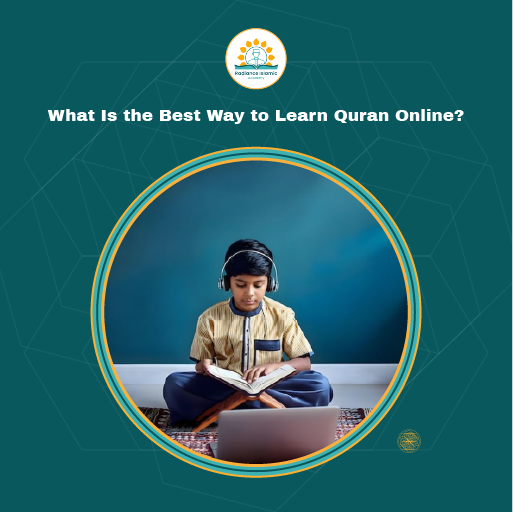
The best way to learn Quran online is not the same for every student.
A complete beginner may need Arabic letters and Noorani Qaida first.
A student who can already read may need guided Quran reading, pronunciation correction, or Tajweed.
A child may need short, interactive lessons with parent support.
An adult may need a flexible routine, private correction, or meaning-focused study.
A Hifz student needs memorization with revision, not memorization alone.
So the best method is not simply the fastest, cheapest, or most popular option.
It is the method that matches the learner’s current level, goal, correction needs, schedule, and ability to stay consistent.
This article explains how to choose the best way to learn Quran online based on what the student actually needs next.
Quick Answer: What Is the Best Way to Learn Quran Online?
The best way to learn Quran online is to begin with a level assessment, choose one clear learning goal, study with live teacher correction when accuracy matters, practise one focused skill between lessons, and review progress regularly.
For many learners, the strongest method is a balanced combination:
- Live teacher guidance for assessment and correction
- Short self-practice for review
- One main learning goal
- A realistic weekly routine
- Regular progress checks
- Clear next steps after each stage
Apps, videos, and self-study can support learning.
But when Quran reading, pronunciation, Tajweed, recitation, or Hifz accuracy matters, live teacher feedback is usually the safer core method.
The best method should make Quran learning clearer, not heavier.
Where the Best Way to Learn Quran Online Fits in the Learning Path
For the full learning-path overview, start with Learn Quran Online: A Step-by-Step Guide for Every Level.
If you are starting from zero, continue with How to Learn Quran Online as a Complete Beginner.
If you are deciding whether self-study is enough, continue with Can You Teach Yourself to Read the Quran?.
Where guided reading correction becomes necessary, continue with Learn Quran Reading Online with a Teacher.
If your main goal is Tajweed, continue with Learn Quran Online with Tajweed.
This article focuses only on one decision:
how to choose the best online Quran learning method based on level, goal, teacher support, practice, and progress.
Do Not Choose a Quran Learning Method by Convenience Alone
Do not choose a Quran learning method only because it looks popular, fast, cheap, or convenient.
The right method should solve the learner’s real problem.
If the student cannot read, they need reading foundations.
If pronunciation mistakes repeat, they need live correction.
When retention is weak, structured revision becomes necessary.
If a child loses focus, they need suitable lesson length, interaction, and parent support.
If an adult wants meaning, they may need guided explanation and gradual vocabulary.
A good method should make the next step clearer.
It should not push the student into a path that looks impressive but does not match their actual level.
The Best Method Has Three Layers
A strong online Quran learning method usually has three layers:
| Learning Layer | Main Purpose |
|---|---|
| Core method | Live teacher assessment, teaching, and correction |
| Support method | Apps, recordings, listening, or short home practice |
| Progress system | Goals, feedback, revision, and regular adjustment |
The core method solves the main learning problem.
The support method reinforces it.
The progress system shows whether the plan is actually working.
Problems often appear when a support tool is treated as the core method.
For example, an app may support letter review, but it should not replace live pronunciation correction.
The Best Method Depends on Your Main Goal
There is no single best method for every student.
The best method depends on what the student is trying to improve now.
Best Online Quran Method by Goal
| Student Goal | Best Starting Method |
|---|---|
| Complete beginner | Letters, vowels, and reading foundations |
| Reads slowly | Guided Quran reading with teacher correction |
| Pronunciation mistakes | Live sound correction |
| Better recitation | Short guided recitation with pacing support |
| Tajweed | Correction first, structured rules gradually |
| Hifz | Memorization plus revision system |
| Short surahs | Teacher modeling, repetition, and review |
| Quran meaning | Simple vocabulary and guided explanation |
| Child learner | Short, active, gentle teacher-led lessons |
| Busy adult | Flexible lessons with focused goals |
If the student has more than one goal, choose the skill that blocks the others.
For example:
- Weak reading blocks Tajweed and fluency
- Repeated pronunciation mistakes affect recitation and Hifz
- Weak revision blocks stronger memorization
- Poor lesson fit may block a child’s consistency
The first method should solve the highest-impact weakness.
Choosing the wrong method may make Quran learning feel harder than it needs to be.
Step 1: Start with a Level Assessment
The best way to learn Quran online usually begins with assessment.
Without assessment, the student may start too easy, too hard, or in the wrong path.
A student may think they need Tajweed, but actually need reading support.
A parent may think their child is ready for Hifz, but the child may need pronunciation correction first.
An adult may think they must study Arabic grammar before Quran reading, but they may be ready to begin Quran reading now.
What a Quran Level Assessment Should Check
| Area | Why It Matters |
|---|---|
| Letter recognition | Shows reading foundation |
| Vowel reading | Shows decoding ability |
| Short-word reading | Shows readiness for Quran reading |
| Pronunciation | Shows correction needs |
| Recitation confidence | Shows comfort reading aloud |
| Memorization level | Shows Hifz readiness |
| Revision strength | Shows retention quality |
| Learning goal | Shows the right path |
| Schedule | Shows realistic lesson frequency |
The assessment should not only label the student as beginner, intermediate, or advanced.
It should identify the first useful next step.
A useful assessment should finish with a recommendation, not only a level name.
The student should understand:
- The main weakness
- The first learning goal
- The suitable lesson format
- The recommended practice method
- The first measurable milestone
Step 2: Choose One Main Learning Goal
A common mistake is trying to learn everything at once.
A student may want reading, Tajweed, memorization, Arabic, meaning, and fluency in the same short period.
That sounds productive, but it can become confusing.
A better method is to choose one main goal and one smaller support goal.
Main Goal and Support Goal Examples
| Main Goal | Support Goal |
|---|---|
| Quran reading | Pronunciation correction |
| Tajweed | Guided recitation practice |
| Hifz | Revision and mistake tracking |
| Short surahs | Simple meaning |
| Quran meaning | Basic vocabulary |
| Child consistency | Short review routine |
| Adult confidence | Reading aloud practice |
The support goal should strengthen the main goal.
It should not compete with it.
Do Not Confuse the Goal with the Method
A learning goal describes what the student wants to improve.
A method describes how the student will improve it.
Examples:
| Goal | Possible Method |
|---|---|
| Improve reading | Live guided reading plus short review |
| Correct pronunciation | Teacher modeling plus focused sound practice |
| Learn Tajweed | Applied correction followed by gradual rules |
| Memorize Quran | Teacher listening plus new, recent, and old revision |
| Understand Quran | Guided explanation plus vocabulary and reliable translation |
Choosing a goal without a method creates confusion.
Choosing a method without a clear goal creates random lessons.
Step 3: Use Live Teacher Correction for Accuracy
Some parts of Quran learning need direct correction.
This includes:
- Reading from the page
- Pronunciation
- Tajweed
- Recitation
- Hifz listening
- Repeated mistakes
- Child engagement
Videos and apps can explain and review.
But they cannot always tell whether the student is reading accurately.
They cannot reliably hear repeated mistakes.
They cannot adjust the lesson when the student is confused, nervous, or guessing.
Self-Study vs Live Teacher Learning
| Self-Study Tools | Live Teacher Learning |
|---|---|
| Useful for review | Useful for correction |
| Flexible anytime | Personalized feedback |
| Good for listening examples | Teacher hears real mistakes |
| Same pace for everyone | Pace adjusts to the learner |
| Limited accountability | Progress can be tracked |
| May miss hidden mistakes | Repeated errors can be corrected |
Self-study can support the best method.
It should not replace teacher correction when accuracy matters.
A teacher is most important when the student needs:
- Errors identified
- Pronunciation heard
- Reading level diagnosed
- Hifz tested
- Tajweed applied
- Confidence supported
- The plan adjusted
Self-study is strongest after the teacher has made the learning target clear.
For a deeper comparison, Online Quran Teacher vs Learning by Yourself explains when self-study helps and when teacher-led learning becomes necessary.
Step 4: Match the Method to the Student Type
The best way to learn Quran online also depends on the learner.
A child, adult beginner, Hifz student, and meaning-focused learner may all need different structures.
Method by Learner Type
| Learner Type | Better Method |
|---|---|
| Young child | Short lessons, gentle teacher tone, parent support |
| Older child | Structured reading, correction, light review |
| Complete beginner | Foundations before advanced Tajweed |
| Adult beginner | Private, respectful, level-based lessons |
| Tajweed learner | Live correction plus gradual rules |
| Hifz student | Teacher listening plus revision categories |
| Arabic learner | Quran goal plus Arabic support goal |
| Busy learner | Focused lessons with realistic home practice |
The best method is not only about content.
It is also about lesson length, tone, pacing, feedback, and consistency.
Step 5: Choose the Right Lesson Format
Online Quran learning can happen in different formats.
The right format depends on the student’s goal and personality.
Online Quran Learning Formats Compared
| Format | Best For | Watch Out For |
|---|---|---|
| Private live class | Reading, pronunciation, Tajweed, Hifz correction | May cost more than group classes |
| Small group class | Motivation, routine, peer learning | Less individual correction |
| Recorded lessons | Review and explanation | No personal correction |
| Apps | Practice and reminders | Limited feedback |
| Parent-supported learning | Young children | Parent should not replace teacher |
| Mixed method | Students needing flexibility | Needs clear structure |
Choose the format based on the correction needed.
- High correction need → private live class
- Moderate correction plus budget concern → small group
- Explanation or review → recorded lesson
- Repetition and reminders → app
- Young child → teacher plus parent-supported routine
- Mixed schedule needs → live core plus support tools
For many students, the best method is not one format alone.
It may be a live teacher as the core, with recordings, apps, or parent support used only as supporting tools.
Private, Group, Recorded, or App: Which Is Best?
Each method can help, but each has limits.
| If the Student Needs… | Better Choice |
|---|---|
| Personal correction | Private live teacher |
| Lower-cost routine | Small group class |
| Extra review | Recorded lesson |
| Daily reminders | Quran app |
| Child support | Teacher plus parent routine |
| Hifz accountability | Live teacher listening |
| Pronunciation correction | Live teacher feedback |
| Meaning support | Guided explanation |
This is a quick selection guide, not the full comparison.
For deeper decisions, continue with:
- Live Quran Classes vs Recorded Lessons
- Private vs Group Quran Classes: Which Is Better?
- Quran App vs Online Quran Teacher
- Online Quran Academy vs Private Tutor
Step 6: Build a Weekly Learning Routine
The best online Quran method should fit real life.
A plan that works for one week but collapses after that is not strong.
The routine should include:
- Lesson time
- Short home practice
- Review
- Teacher feedback
- Progress check
- Adjustment when needed
Simple Weekly Quran Learning Routine
Live lesson
↓
One correction focus
↓
Short home practice
↓
Review before next lesson
↓
Teacher checks progress
↓
Adjust next goal
This routine works better than random practice.
The student always knows what to improve next.
A weekly plan should answer four questions:
- What will the teacher correct?
- What will the student practise?
- What will be reviewed?
- How will progress be checked?
Without these four parts, lessons may feel active but still lack direction.
How Often Should You Learn Quran Online?
The best frequency depends on age, goal, schedule, and attention.
Some learners do well with two or three short lessons per week.
A common preference among adults is fewer but focused lessons.
Some Hifz students need more frequent teacher listening.
Some children need short lessons rather than long sessions.
Frequency Guide
| Goal | Possible Starting Frequency |
|---|---|
| Beginner reading | 2–3 short lessons per week |
| Pronunciation correction | 2+ lessons with short practice |
| Tajweed | 2–3 lessons depending on level |
| Hifz | Often more frequent with revision |
| Children | Shorter lessons, consistent rhythm |
| Busy adults | Fewer lessons plus focused review |
This is only a starting guide.
The schedule should change when progress, focus, or revision quality changes.
Use frequency to solve a real problem.
Increase contact when:
- The student forgets between lessons
- Correction is not becoming stable
- Hifz revision is weak
- Reading practice is too far apart
Reduce or shorten lessons when:
- The student becomes consistently overwhelmed
- Focus drops early
- Home review is no longer manageable
- The schedule cannot be maintained
For children specifically, How Often Should Kids Take Online Quran Classes? explains how to choose lesson frequency without overwhelming the child.
The Best Way for Complete Beginners
Complete beginners should usually begin with foundations.
This may include:
- Arabic letters
- Letter sounds
- Vowels
- Joining letters
- Short words
- Reading without guessing
- Gradual Quran reading
A complete beginner should not be pushed into advanced Tajweed or long recitation too early.
The beginner should not be placed automatically into every foundation stage.
A short assessment should determine whether the student needs:
- Full letter foundations
- Vowel practice
- Noorani Qaida
- A mixed transition plan
- Guided Quran reading
If the student is starting from zero, How to Start Reading Quran from Zero gives a focused beginner path.
If the student is unsure whether to begin with Noorani Qaida or Quran reading, Noorani Qaida or Quran Reading: Where Should You Start? gives a practical readiness check.
The Best Way for Students Who Can Read but Make Mistakes
Some students can read Quran but still make repeated mistakes.
They may skip vowels, guess words, confuse letters, or hesitate often.
The best method is usually guided reading with teacher correction.
The teacher should identify whether the main issue is decoding, pronunciation, fluency, confidence, or a mixed weakness.
These problems may look similar, but they require different correction plans.
This helps the student improve accuracy before moving into heavier goals.
If this is your situation, Learn Quran Reading Online with a Teacher explains how live correction helps students move from uncertain reading to more confident reading.
The Best Way for Pronunciation and Tajweed
If the main issue is sound accuracy, the student may need pronunciation correction before a full Tajweed course.
If the student can read and apply correction, structured Tajweed may become useful.
Pronunciation and Tajweed Path
Reading Check
↓
Pronunciation Assessment
↓
Focused Sound Correction
↓
Apply Correction During Recitation
↓
Introduce Tajweed Rules Gradually
↓
Review the Same Skill
If repeated sound mistakes are the main issue, continue with Learn Quran Pronunciation Online.
If the student needs the broader Tajweed path, continue with Learn Quran Online with Tajweed.
The Best Way for Memorization
Memorization needs more than new portions.
A strong Hifz method includes:
- Reading readiness
- Pronunciation correction
- New memorization
- Recent revision
- Old revision
- Teacher listening
- Mistake tracking
- Realistic pacing
If a student memorizes more but forgets older portions, the method needs adjustment.
The best memorization method protects retention.
A Hifz method should not be selected only by how much new memorization it promises.
It should explain:
- How new memorization is assigned
- How recent revision is checked
- How older portions are protected
- How mistakes are recorded
- When the new target is reduced
If Hifz is your main goal, Learn to Memorize Quran Online explains how to balance new memorization, recent revision, and old revision.
The Best Way for Children
For children, the best way to learn Quran online is usually short, structured, teacher-led, and emotionally safe.
A child needs:
- A patient teacher
- Short lesson blocks
- Active participation
- Gentle correction
- Parent support
- Realistic expectations
- Progress tracking
The best method for children should not depend on pressure.
It should build routine and confidence.
For children, teacher-child fit may matter as much as curriculum.
A technically strong method may still fail if the lesson is too long, passive, harsh, or difficult for the child’s age and attention.
For the full child learning path, Learn Quran Online for Kids: A Parent’s Guide gives parents a broader roadmap.
The Best Way for Adults
Adults often need flexibility and privacy.
Some adults want to restart from the basics.
The primary objective is to correct old mistakes.
Some want to improve recitation.
Some want meaning and understanding.
A good adult online Quran method should include:
- Respectful assessment
- Clear goal selection
- Flexible scheduling
- Live correction
- Short home practice
- Progress review
- No embarrassment about starting late
Adults should not be forced into beginner material automatically if they can already read.
They should begin from their real level.
Adults should also choose whether they need:
- Privacy and one-to-one correction
- Flexible scheduling
- Reading repair
- Pronunciation correction
- Recitation confidence
- Tajweed structure
- Meaning and understanding
The Best Way to Learn Quran with Meaning
If the goal is understanding, the method should be gradual and reliable.
The student may need:
- Reading or recitation support
- Reliable translation
- One useful Quranic word
- Simple explanation
- Guided reflection
- Clear boundaries between meaning and Tafsir
Meaning should not turn every lesson into a heavy lecture.
If this is the main goal, Learn Quran with Meaning and Understanding explains how meaning can be added safely and gradually.
Use a Simple Method Scorecard
Review the learning method every few weeks:
| Question | Yes or No |
|---|---|
| Is the main learning goal clear? | |
| Is the teacher correcting the real weakness? | |
| Is home practice specific? | |
| Are repeated mistakes decreasing? | |
| Is the schedule sustainable? | |
| Does the student know the next goal? | |
| Is the method being adjusted when needed? |
If most answers are no, the method needs review even if the student is attending regularly.
How to Know If Your Method Is Working
A method is working when progress becomes visible and the student knows what is improving.
Progress Signs
| Progress Sign | What It Shows |
|---|---|
| Fewer repeated mistakes | Correction is working |
| Less guessing | Reading is improving |
| Clearer pronunciation | Sound correction is helping |
| Better revision | Memorization is stronger |
| More confidence | Lesson fit is improving |
| Student knows next goal | Learning path is clear |
| Teacher adjusts plan | Method is responsive |
A method is not working well if the student keeps repeating the same mistake for weeks without a change in plan.
When Should You Change Your Quran Learning Method?
Do not change methods after one difficult lesson.
But do review the method if the same problem continues.
Change or Adjust the Method When…
| Problem | Possible Adjustment |
|---|---|
| Student is always overwhelmed | Reduce lesson load |
| Same mistake repeats | Add focused correction |
| Reading is not improving | Recheck foundations |
| Child loses focus | Shorten lesson or change timing |
| Hifz is forgotten quickly | Strengthen revision |
| Arabic feels too heavy | Reduce support goal |
| No progress is tracked | Ask for clear goals |
| Teacher only finishes pages | Request correction and feedback |
Do not change the entire method immediately.
Use this order:
Identify the repeated problem
↓
Change one factor
↓
Observe across several lessons
↓
Review teacher feedback
↓
Keep, adjust, or replace the method
Possible factors include:
- Level
- Teacher fit
- Lesson length
- Frequency
- Home practice
- Correction style
- Class format
Change one factor first.
Then observe the result across several lessons.
How Radiance Islamic Academy Helps Students Choose the Right Method
After comparing different online Quran learning methods, the practical question becomes:
“How can an academy help a student choose the right path?”
At Radiance Islamic Academy, the learning method should be based on the student’s current level, main goal, age, schedule, confidence, correction needs, and preferred lesson format.
During an assessment, the teacher can check:
- Letter and vowel recognition
- Quran reading ability
- Pronunciation needs
- Recitation confidence
- Tajweed readiness
- Memorization and revision strength
- Arabic or meaning goals
- Attention needs for children
- Available study schedule
- Need for private, group, or mixed learning
After the assessment, the student or parent should receive a clear recommendation explaining:
- The main learning goal
- The support goal
- The suitable learning method
- The lesson format
- The recommended frequency
- The first correction focus
- The first measurable milestone
Learn More About Radiance Islamic Academy
Students and parents can visit Radiance Islamic Academy’s official Facebook, Instagram, and WhatsApp channels to see academy updates, announcements, communication style, and how learners can ask questions before choosing a class.
These official channels provide an additional view of the academy’s communication. However, the main decision should still depend on teacher quality, assessment, correction style, lesson structure, and student support.
Common Mistakes When Choosing How to Learn Quran Online
Avoid these mistakes:
- Choosing a method before checking the student’s level
- Combining reading, pronunciation, Tajweed, Hifz, Arabic, and meaning without one clear priority
- Using videos only when correction is needed
- Starting Hifz before reading and revision are ready
- Choosing the cheapest option without checking teacher quality
- Treating apps as a full replacement for teacher feedback
- Forcing children into long lessons
- Studying Arabic grammar before reading foundations are stable
- Measuring progress only by pages completed
- Changing methods too quickly after one hard lesson
- Staying with the same method when repeated mistakes never improve
- Choosing a platform before defining the learning goal
- Treating a support tool as the main learning method
- Choosing private or group classes without considering correction needs
- Staying in a method because it is convenient even when progress is weak
- Measuring attendance instead of skill improvement
- Choosing a course by features instead of the student’s main weakness
- Using the same method for children and adults
The best method is not always the most impressive one.
It is the one that helps the student make steady, corrected progress.
Final Method Selection Checklist
Before choosing the best way to learn Quran online, ask:
- What is the student’s current reading level?
- What is the main goal right now?
- Does the student need live correction?
- Is pronunciation a repeated issue?
- Is the student ready for Tajweed?
- Is memorization supported by revision?
- Is the lesson length realistic?
- Is the teacher tracking progress?
- Is the home practice clear?
- Does the method fit the student’s age and schedule?
- Is there a measurable next goal?
If several answers are unclear, begin with a level assessment before choosing a full program.
Frequently Asked Questions
The best way is to start with a level assessment, choose one main learning goal, learn with teacher correction when accuracy matters, practise consistently, and review progress regularly.
A live teacher is usually the best core method when the student needs reading, pronunciation, Tajweed, recitation, or Hifz correction.
Apps, videos, and recordings can still be useful for review and practice.
The strongest method is often live correction supported by structured self-practice.
It can be.
A mixed method may use live lessons for correction, recordings for review, apps for reminders, and short home practice for repetition.
It works only when each tool has a clear role and supports one main learning goal.
You can use self-study for review, listening, and practice. However, reading, pronunciation, Tajweed, and Hifz usually benefit from live teacher correction.
Online Quran classes are usually better for correction and feedback. Apps can support practice, but they cannot fully replace a teacher who listens and adjusts the lesson.
A beginner should start with letters, vowels, short words, reading foundations, and teacher correction before moving into advanced Tajweed or long recitation.
Children usually learn best through short, gentle, interactive lessons with a patient teacher, parent support, clear goals, and realistic expectations.
Private classes usually work better for personal correction. Group classes may help with routine and affordability, but they may provide less individual feedback.
Conclusion: The Best Method Starts with the Right Diagnosis
The best way to learn Quran online is not the same for every student.
It depends on the student’s level, goal, age, schedule, confidence, and correction needs.
For one student, the best method may be reading foundations.
Alternatively, the focus may be on pronunciation correction
For another, it may be Tajweed, Hifz, short surahs, Arabic, or meaning.
The strongest online Quran method has three parts:
- The right diagnosis
- The right core learning method
- A clear system for practice and progress review
For one student, the core method may be guided reading.
For another, it may be pronunciation correction, Tajweed, Hifz, or meaning-focused learning.
Apps, recordings, groups, and self-study can support the path, but they should not replace the correction or guidance the student actually needs.
The best way to learn Quran online is the method that solves the student’s main weakness, fits real life, and produces measurable progress over time.
Next Step
If you want to compare live and recorded learning, continue with Live Quran Classes vs Recorded Lessons.
When deciding between teacher-led learning and self-study, continue with Online Quran Teacher vs Learning by Yourself.
If you are choosing between private and group classes, continue with Private vs Group Quran Classes: Which Is Better?
If you are unsure which method fits your level, begin with a Free Quran Assessment.