


Learn Quran online for kids should begin with the child’s real level, not with a fixed course path for every child.
Some children need Arabic letters first.
Others need Noorani Qaida, short-word reading, guided Quran reading, Tajweed correction, or a gentle Hifz plan with revision.
A child may also need shorter lessons, patient repetition, and a teacher who can keep the class calm and interactive.
The goal is not to make the child look advanced quickly.
The goal is to help the child build Quran reading, confidence, correction, and consistency in a way they can continue.
This parent guide explains how children can learn Quran online through the right level, teacher, routine, and next step.
Where This Fits in the Learn Quran Online Path
For the full learning-path overview, start with Learn Quran Online: A Step-by-Step Guide for Every Level.
If you want to know whether online learning can truly work for children, continue with Can Children Really Learn Quran Online?.
When age and readiness take primary priority, continue with Best Age to Learn Quran Online for Kids.
If your child can repeat short surahs but cannot read yet, continue with Noorani Qaida or Quran Reading: Where Should You Start?.
This article focuses only on the parent decision:
how children can learn Quran online with the right starting level, teacher support, lesson length, and home routine.
Quick Answer: Can Kids Learn Quran Online?
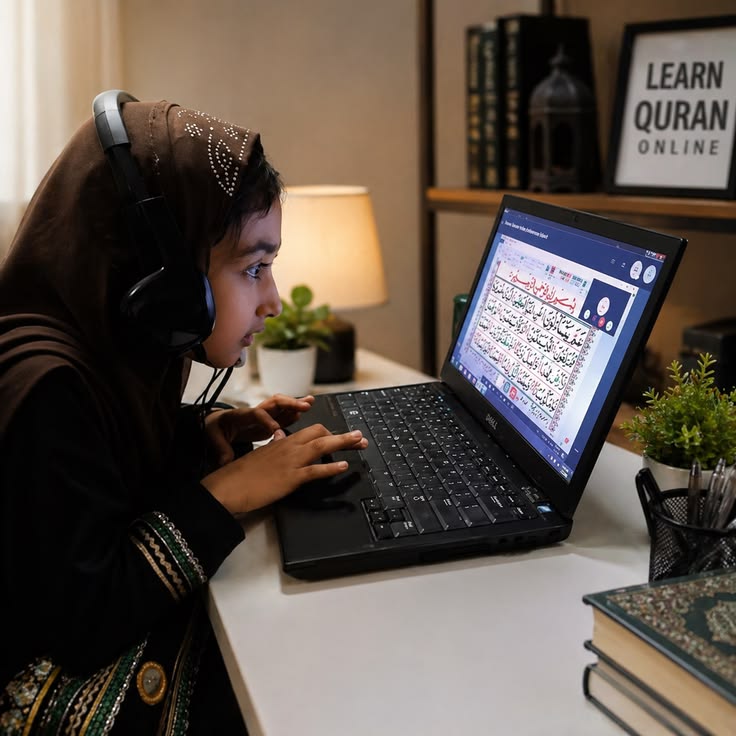
Yes, kids can learn Quran online when the lessons are live, age-appropriate, structured, and taught by a patient teacher who understands children.
A child may begin with Arabic letters, Noorani Qaida, Quran reading, Tajweed correction, short surahs, or Hifz depending on their level.
The best online Quran learning path for kids should include:
- A clear level check
- Short, focused lessons
- Gentle correction
- Parent feedback
- Realistic goals
- A schedule the child can maintain
Children do not need to start perfectly.
They need to start from the right level.
Kids Quran Learning Roadmap
A child’s online Quran journey should feel like a path, not random lessons.
Here is a simple roadmap many children follow:
Level Check
↓
Arabic Letters or Noorani Qaida
↓
Short Words and Reading Practice
↓
Guided Quran Reading
↓
Basic Tajweed Correction
↓
Short Surahs or Hifz Path
↓
Revision and Consistency
Not every child moves through these stages at the same speed.
Some children need more time with letters.
Fast learners move quickly into reading
Some need confidence before correction becomes heavier.
Some are ready for memorization only after reading becomes stable.
The right path depends on the child’s age, focus, level, and comfort.
What Progress Should Parents Expect?
Progress in online Quran learning does not always appear in the same way for every child.
In the beginning, progress may mean that the child becomes comfortable with the teacher, follows the lesson routine, and participates without fear.
Later, progress may become easier to see through letter recognition, stronger reading, fewer guesses, clearer pronunciation, or better revision.
| Learning Stage | What Parents May Notice |
|---|---|
| First lessons | Better comfort, participation, and teacher connection |
| Foundation stage | Stronger letter and vowel recognition |
| Early reading stage | Reading short words with less guessing |
| Quran reading stage | Better pace and fewer repeated mistakes |
| Tajweed stage | Clearer pronunciation and correction |
| Hifz stage | Better revision and stronger recall |
Parents should look for steady improvement, not instant results.
The most useful progress question is not:
“How much Quran has my child finished?”
It is:
“What can my child now do more confidently than before?”
For a practical system for recording skills, teacher feedback, revision, and learning milestones, continue with How Parents Can Track Quran Learning Progress.
Start with Your Child’s Current Level
The first step is not choosing the most advanced course.
The first step is knowing where your child actually is.
A child who cannot recognize letters should not be pushed into Quran pages.
Children who can repeat surahs by listening may still need reading foundations
A child who can read slowly may need guided practice rather than Noorani Qaida from the beginning.
Child Level Check
| What Your Child Can Do | Better Starting Point |
|---|---|
| Cannot recognize Arabic letters | Arabic alphabet |
| Knows some letters but cannot read words | Noorani Qaida |
| Can read short words slowly | Beginner Quran reading |
| Reads Quran but makes mistakes | Basic Tajweed correction |
| Memorizes by listening only | Reading foundation plus revision |
| Wants to memorize more | Hifz path with teacher support |
| Unsure of level | Assessment lesson |
If you are unsure whether your child needs Noorani Qaida or guided Quran reading, Noorani Qaida or Quran Reading: Where Should You Start? gives a more focused readiness guide.
Not Sure Which Quran Path Fits Your Child?
A short assessment can show whether your child should begin with Arabic letters, Noorani Qaida, guided Quran reading, Tajweed correction, Hifz, or a mixed transition plan.
This is especially useful if:
- Your child knows some letters but cannot read words
- They can repeat surahs but cannot read them
- They guess instead of decoding words
- They lose confidence when looking at Quran pages
- You are unsure whether they need Noorani Qaida or Quran reading
- You want to avoid choosing the wrong class
Start with a Free Quran Assessment before choosing a full course.
That first step can make the learning path much clearer.
What Should Kids Learn First?
Children should begin with the first skill they cannot do confidently.
For some children, that means Arabic letters and sounds.
For others, it means Noorani Qaida, guided Quran reading, Tajweed correction, or a reading check before Hifz.
| If Your Child… | Start With… |
|---|---|
| Does not know letters | Letter recognition |
| Knows letters but cannot join them | Noorani Qaida |
| Can read short words | Guided Quran reading |
| Reads but makes repeated sound mistakes | Tajweed correction |
| Wants to memorize | Reading and pronunciation check |
The right first step depends on the child’s current ability, not only age.
For a deeper guide to this decision, continue with What Should Kids Learn First in Quran Classes?
Why Lesson Length Matters for Children
Longer lessons are not always better for children.
A short lesson where the child participates calmly may be more useful than a long lesson filled with distraction or resistance.
Lesson length should depend on:
- Age
- Focus
- Learning goal
- Time of day
- Child confidence
- Teacher style
The goal is not to fill time.
The goal is to choose a lesson length the child can manage consistently.
For a more detailed schedule guide, continue with How Often Should Kids Take Online Quran Classes?
If distraction is the main concern, How to Keep Kids Focused During Online Quran Lessons gives more practical guidance.
How Parents Can Support Online Quran Learning at Home

Parents do not need to become Quran teachers.
But they do help shape the learning routine.
A child learns better when the parent prepares the space, keeps the schedule steady, and responds calmly to mistakes.
Parent support may include:
- Preparing the device
- Choosing a quiet space
- Keeping the class time consistent
- Encouraging effort
- Reviewing teacher feedback
- Avoiding comparison with siblings
- Helping the child revise briefly
The parent’s role is not to pressure the child.
The parent’s role is to protect the routine.
For more ways to build motivation without pressure, continue with How to Help Your Child Enjoy Online Quran Lessons.
Listening Memory Is Not the Same as Reading Ability
Many children can recite short surahs because they have heard them often.
That is valuable.
But it does not always mean the child can read those surahs from the page.
A child may know the sound of a surah but still not recognize letters, vowels, or joined words.
This distinction matters.
If parents assume listening equals reading, the child may be placed too far ahead.
A better approach is to test reading gently.
Can the child identify the letters?
Are they reading short words?
Can they decode instead of guessing?
If not, the child may need reading foundations before moving forward.
If your child is just beginning to read from zero, How to Start Reading Quran from Zero gives a practical first-stage plan.
When Should Kids Start Tajweed?
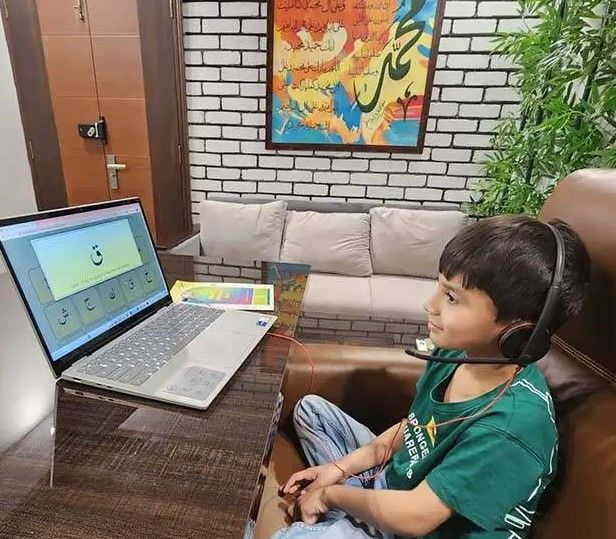
Children can receive simple pronunciation correction early, but advanced Tajweed should not overwhelm them.
A young child may first need to hear and repeat sounds correctly.
Later, as reading improves, the teacher can introduce more formal Tajweed rules gradually.
Signs your child may need Tajweed support include:
- Repeating the same sound mistakes
- Stretching sounds incorrectly
- Confusing similar letters
- Reading without clear pronunciation
- Memorizing with repeated mistakes
Tajweed for children should feel supportive, not frightening.
The teacher’s correction style matters.
What If Your Child Wants to Memorize Quran?
Some children love memorizing short surahs.
Others begin Hifz after they have built stronger reading.
Both paths can work, but memorization should not ignore reading, correction, and revision.
Before increasing memorization, ask:
- Can the child read basic words?
- Are pronunciation mistakes being corrected?
- Is there a revision routine?
- Can the child review old portions?
- Is the pace realistic?
If memorization is your child’s next goal, Complete Guide to Quran Memorization for Kids explains how reading, revision, and consistency support long-term Hifz.
How to Know If Online Quran Learning Is the Right Fit
Online Quran learning can work well for children when the system is suitable.
It may be a good fit if your child:
- Learns better in a familiar home environment
- Needs flexible scheduling
- Benefits from one-on-one correction
- Feels shy in large classes
- Needs parent-visible learning
- Requires a teacher matched to their level
It may not work well if the lesson is too long, the teacher is not child-friendly, the schedule is unrealistic, or the child receives little correction.
This is why parents should compare the full learning experience, not only the word “online.”
If you are comparing class structure, teacher quality, safety, pricing, trial lessons, and parent support, Best Online Quran Classes for Kids gives a broader service-selection guide.
How Radiance Islamic Academy Supports Children Learning Quran Online
After understanding what children need from online Quran learning, the next question is practical:
“How can an academy support the right path for my child?”
At Radiance Islamic Academy, the child’s starting point should be based on reading ability, age, focus, confidence, and learning goals.
During an assessment, the teacher can check:
- Letter recognition
- Vowel reading
- Short-word reading
- Pronunciation
- Confidence
- Attention during the lesson
- Current memorization level
After the assessment, the parent should receive a clear recommendation explaining the child’s current level, the most suitable learning path, the recommended lesson length, and the first learning goal.
Learn More About Radiance Islamic Academy
Parents can visit Radiance Islamic Academy’s official Facebook and Instagram pages to see recent academy updates, learning activities, announcements, and communication with families.
These official pages provide an additional view of the academy’s activities and communication style. However, the main course decision should still be based on teacher quality, child assessment, lesson structure, safety, and parent support.
Common Mistakes Parents Should Avoid
Parents usually want the best for their children, but a few common mistakes can make Quran learning harder.
Avoid these:
- Starting too advanced
- Choosing long lessons too early
- Assuming memorized surahs mean reading ability
- Ignoring the child’s comfort with the teacher
- Skipping reading foundations before Hifz
- Comparing siblings
- Expecting perfect focus from the first lessons
- Choosing only by price
- Not asking for feedback after lessons
A child needs structure.
But they also need patience.
Final Parent Checklist
Before choosing how your child will learn Quran online, ask:
- What is my child’s current level?
- Can they recognize Arabic letters?
- Can they read short words?
- Are they reading or guessing?
- Do they need Noorani Qaida?
- Is Tajweed correction needed now?
- Is Hifz realistic yet?
- Is the lesson length suitable?
- Is the teacher child-friendly?
- Will I receive feedback?
- Can this schedule continue?
If several answers are unclear, begin with assessment before choosing a course.
Frequently Asked Questions
Yes, kids can learn Quran online when lessons are live, structured, age-appropriate, and taught by patient teachers who understand children.
Kids should start with the first skill they cannot do confidently. This may be Arabic letters, Noorani Qaida, beginner reading, Tajweed correction, or memorization support.
Yes. Children can begin with Arabic letters, sounds, vowels, and Noorani Qaida before moving into Quran reading.
It depends on the child’s age, focus, and goal. Many younger children do better with shorter, consistent lessons rather than long sessions.
The right frequency depends on the child’s age, focus, current level, and learning goal. Short, consistent lessons often work better than one long weekly session.
For a detailed schedule based on age, focus, and learning goals, continue with How Often Should Kids Take Online Quran Classes?
Yes, children can memorize Quran online when they have teacher support, reading correction, revision, realistic pacing, and parent encouragement.
Conclusion: Help Your Child Start from the Right Level
Children can learn Quran online when the path is clear and realistic.
The best starting point depends on the child’s level.
Some children need letters.
Some need Noorani Qaida.
Students are ready for Quran reading
Some need Tajweed correction.
Some may begin memorization once reading and revision are strong enough.
Do not rush the journey.
A calm beginning can help your child build confidence, consistency, and a stronger relationship with Quran learning.
The goal is not only to start online Quran lessons.
The goal is to choose a path your child can continue.
Next Step
If you are unsure which Quran learning path fits your child, begin with a Free Quran Assessment.
If you want to compare online Quran programs before choosing, continue with How to Choose the Right Online Quran Program.