


How to learn Quran online as a complete beginner should start with the right foundation, not with the most advanced-looking course.
If you do not know Arabic letters yet, your first goal is not speed.
Your first goal is to learn letters, sounds, vowel marks, joining, and simple Quranic words in the right order.
Some beginners need Noorani Qaida. Others may need guided Quran reading. A child may need shorter practice and more repetition. An adult may need a clear, structured path from zero.
This article helps complete beginners choose the correct starting level before moving into Quran pages, Tajweed, Hifz, or a full Quran course.
Where This Fits in the Learn Quran Online Path
For the full learning-path overview, start with Learn Quran Online: A Step-by-Step Guide for Every Level.
If your main concern is not knowing Arabic, continue with Can You Learn Quran Online Without Knowing Arabic?.
If you are choosing between Noorani Qaida and direct Quran reading, continue with Noorani Qaida or Quran Reading: Where Should You Start?.
This article focuses only on the complete beginner stage:
how to start from zero without skipping the reading foundations.
Quick Answer: How Can a Complete Beginner Learn Quran Online?
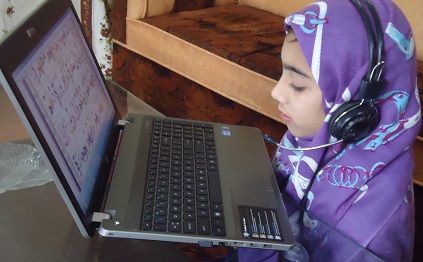
A complete beginner can learn Quran online by starting with Arabic letters, correct pronunciation, vowel marks, letter joining, Noorani Qaida, short Quranic words, and guided Quran reading with a teacher.
The best beginner path is usually:
Level Assessment
↓
Arabic Letters
↓
Letter Sounds and Vowels
↓
Joining Letters
↓
Noorani Qaida
↓
Short Quranic Words
↓
Guided Quran Reading
↓
Basic Tajweed Correction
A beginner should focus on steady reading foundations before moving into advanced Tajweed, long recitation, or memorization.
How This Beginner Guide Fits the Full Quran Learning Path
This article focuses on the first stage: how to learn Quran online as a complete beginner.
That main guide helps students choose between beginner reading, kids’ lessons, Tajweed, Hifz, teacher-led learning, and trial assessment.
This page goes deeper into the beginner path only.
If your main concern is not knowing Arabic, Can You Learn Quran Online Without Knowing Arabic? will help you understand that specific barrier.
If you are choosing between starting with Noorani Qaida or Quran reading, continue later with Noorani Qaida or Quran Reading: Where Should You Start?.
Step 1: Understand What “Complete Beginner” Really Means
A complete beginner is not a weak student.
A complete beginner simply needs the right starting point.
You may be a beginner if:
- You cannot recognize Arabic letters
- You confuse similar-looking letters
- You do not know vowel marks
- You cannot join letters into words
- You can repeat short surahs but cannot read them
- You learned years ago but forgot the basics
- Your child recognizes some letters but cannot read words yet
The first goal is not speed.
The first goal is accuracy.
A beginner who learns the foundations properly will usually progress more confidently later.
Beginner Level Check
| If This Describes You | Better Starting Point |
|---|---|
| I do not know Arabic letters | Arabic alphabet |
| I know some letters but confuse them | Letter recognition practice |
| I know letters but cannot read words | Joining letters and vowels |
| I can read slowly | Guided Quran reading |
| I make many sound mistakes | Basic Tajweed correction |
| I am unsure where I fit | Free assessment lesson |
Not Sure Where to Start?
A short assessment lesson can show whether you or your child should begin with Arabic letters, Noorani Qaida, beginner Quran reading, or basic Tajweed correction.
This is especially useful if:
- You learned before but forgot
- Your child knows some letters but cannot read words
- You are unsure whether Noorani Qaida is necessary
- You want to avoid choosing the wrong course
- You need teacher guidance before enrolling
Start with a Free Quran Assessment before choosing a full course.
That one step can save time and prevent frustration.
Step 2: Start with Arabic Letters and Sounds
The first foundation is recognizing Arabic letters.
Beginners need to learn how each letter looks, how it sounds, and how it changes shape depending on where it appears in a word.
This stage may feel simple, but it matters.
If a student rushes through letters, reading becomes harder later.
A good beginner Quran course should teach:
- Letter names
- Letter shapes
- Correct sounds
- Similar letters
- Vowel marks
- Short practice words
For children, this stage should be gentle and repetitive.
For adults, it should be clear and structured.
The aim is not only to identify letters.
The aim is to prepare the student to read Quranic words correctly.
Step 3: Learn Vowels and Joining Letters
After recognizing letters, beginners need to understand how Arabic letters connect.
This is where many students struggle.
They may know individual letters, but when the letters appear together, they feel lost.
That is normal.
Arabic reading requires practice with:
- Fatha
- Kasra
- Damma
- Sukoon
- Shaddah
- Madd letters
- Joined letters
- Short words
This stage builds the bridge between knowing letters and reading Quran.
Common Beginner Mistake
Many beginners try to jump from letter recognition directly to Quran pages.
That often creates stress.
It is better to practise joining letters and short words first, then move gradually into Quran reading.
Step 4: Use Noorani Qaida as a Beginner Bridge
Noorani Qaida is often useful for complete beginners because it teaches Quran reading foundations step by step.
It helps students move from letters to words in a structured way.
A beginner may benefit from Noorani Qaida if they:
- Cannot join letters yet
- Need help with vowel marks
- Struggle with pronunciation
- Need repeated reading practice
- Are a child starting Quran for the first time
- Want a structured foundation before Quran pages
Noorani Qaida is not the final goal.
It is a bridge.
The goal is to help the student read Quran more confidently.
If you are unsure whether Noorani Qaida is the right starting point, continue with Noorani Qaida or Quran Reading: Where Should You Start?.
If you already know the basics, a Beginner Quran Course may be a better next step.
Step 5: Move Slowly into Quran Reading
Once the student can recognize letters, understand vowels, and read joined words, they can begin guided Quran reading.
At this stage, the teacher should not rush.
The student may read slowly.
They may pause often.
“It is completely normal for young learners to occasionally repeat sounds as they find their rhythm.”
They may need help with similar letters.
That is part of the process.
A good online Quran teacher should listen carefully and correct gently.
Beginner Quran Reading Should Include
| Skill | Why It Matters |
|---|---|
| Slow reading | Builds accuracy |
| Teacher listening | Catches mistakes early |
| Repetition | Improves confidence |
| Short portions | Prevents overwhelm |
| Gentle correction | Keeps the student motivated |
| Home practice | Builds consistency |
The goal is not to finish pages quickly.
The goal is to read correctly and continue.
Step 6: Add Basic Tajweed at the Right Time
Beginners do not need to start with advanced Tajweed rules.
However, pronunciation correction should begin early.
If a student repeats the same sound mistakes for months, those mistakes can become habits.
So the right approach is balance.
Teach basic correction without overwhelming the beginner.
A beginner may need help with:
- Similar letters
- Heavy and light sounds
- Stretching sounds
- Clear pronunciation
- Stopping correctly
- Repeating difficult words
Advanced Tajweed can come later.
At the beginning, the most important thing is careful listening and gentle correction.
If pronunciation becomes your main focus, continue with Learn Quran Online with Tajweed.
Step 7: Decide Whether You Need a Teacher or Self-Study
A complete beginner can use apps, videos, and practice tools.
But self-study has limits.
The biggest problem is that beginners often cannot hear their own mistakes.
A teacher can listen, correct, repeat sounds, adjust the pace, and explain the next step.
Teacher vs Self-Study for Beginners
| Option | Good For | Limitation |
|---|---|---|
| Apps | Extra practice | No personal correction |
| Videos | Explanations | No feedback |
| Books | Review | Hard for pronunciation |
| Live teacher | Correction and structure | Needs scheduling |
| Online academy | Full learning path | Quality depends on systems |
If you are comparing both options, read Online Quran Teacher vs Learning by Yourself.
If you want to compare programs before enrolling, How to Choose the Right Online Quran Program will help.
Step 8: Build a Simple Beginner Practice Routine
Beginners do not need complicated homework.
They need short, consistent practice.
A simple routine may work better than long, irregular sessions.
Beginner Weekly Routine
| Practice Type | Simple Goal |
|---|---|
| Class lesson | Learn and receive correction |
| 5–10 minute review | Repeat letters or words |
| Short listening | Hear correct pronunciation |
| Parent support for kids | Keep practice calm |
| Weekly feedback | Know what to improve next |
For children, practice should not feel like punishment.
For adults, practice should feel manageable.
Consistency matters more than intensity.
Why Many Beginners Choose Online Quran Learning
Online Quran learning can be especially helpful for beginners because it removes some practical barriers.
Students can start from home, study with a live teacher, and follow a structured path without needing to travel.
Why Online Works for Beginners
| Benefit | Why It Helps |
|---|---|
| Level assessment | Student starts from the right point |
| Flexible schedule | Easier to build consistency |
| Live teacher | Mistakes are corrected early |
| Short lessons | Beginners avoid overwhelm |
| Parent updates | Children receive support at home |
| Trial before commitment | Families can test the fit first |
Online learning works best when convenience is combined with real teacher correction.
How Radiance Islamic Academy Supports Beginner Quran Learners
After understanding the beginner path, the next question is natural:
“How does a specific academy help a beginner start correctly?”
At Radiance Islamic Academy, beginner Quran learning should begin with level clarity.
The aim is not to push every student directly into the same class.
The aim is to understand whether the student needs Arabic letters, Noorani Qaida, Quran reading, Tajweed correction, or a different path.
A complete beginner may be guided toward:
- Noorani Qaida Course
- Beginner Quran Course
- Quran Reading Course
- Online Quran Classes for Kids
- Free Quran Assessment
Parents and adult learners can also review the Courses Page or ask questions through the Contact Page before choosing.
The best beginner course is not the one that sounds advanced.
It is the one that starts where the student actually is.
Common Mistakes Beginners Should Avoid
Many beginners struggle because they start with the wrong expectation.
Avoid these mistakes:
- Starting directly from Quran pages without letter foundations
- Choosing a course only because it is cheap
- Relying only on videos when correction is needed
- Skipping vowel marks and joining practice
- Moving too quickly into Tajweed rules
- Expecting fluency in a few days
- Choosing long lessons for young children
- Not practising between classes
A slow, correct start is better than a fast, confusing one.
Beginner Decision Checklist
Before choosing a beginner Quran course online, ask:
- Do I know Arabic letters?
- Can I join letters into words?
- Do I understand vowel marks?
- Can I read slowly without guessing?
- Do I need Noorani Qaida first?
- Will a teacher listen and correct me?
- Is the lesson length realistic?
- Is this course suitable for a child or adult?
- Can I take an assessment before enrolling?
- Is there a clear next step after the first class?
If several answers are unclear, do not guess.
Start with an assessment.
Conclusion: The Best Way to Learn Quran Online as a Complete Beginner
The best way to learn Quran online as a complete beginner is to start from the foundations.
Begin with Arabic letters.
Then learn sounds, vowels, joining, Noorani Qaida, and guided Quran reading.
Add basic pronunciation correction early, but do not overwhelm yourself or your child with advanced Tajweed too soon.
Most importantly, do not rush into the wrong level.
A complete beginner does not need pressure.
They need a clear path, a patient teacher, and a routine they can continue.
When the beginning is built properly, Quran reading becomes easier, calmer, and more sustainable.
Frequently Asked Questions
It depends on your starting level, lesson frequency, teacher support, and practice. A complete beginner usually needs time to learn letters, sounds, joining, and reading before becoming confident with Quran pages.
Yes, you can learn Quran online without speaking Arabic. Beginners usually start with Arabic letters, vowel marks, joining letters, Noorani Qaida, and guided Quran reading.
Many complete beginners should start with Noorani Qaida because it teaches letters, sounds, vowels, joining, and reading foundations before full Quran reading.
Yes, adults can learn Quran online from zero. The key is to start with the correct level, study consistently, and work with a teacher who can explain clearly and correct pronunciation.
A teacher is strongly recommended because beginners often cannot hear their own pronunciation mistakes. A live teacher can correct sounds, guide reading, and prevent repeated errors.
Next Step
If you want the full learning-path overview, return to Learn Quran Online: A Step-by-Step Guide for Every Level.
For families whose main concern is Arabic literacy, continue with Can You Learn Quran Online Without Knowing Arabic?.
If you are unsure whether to start with Noorani Qaida or Quran reading, continue with Noorani Qaida or Quran Reading: Where Should You Start?.
If you want help choosing the right beginner level, start with a Free Quran Assessment.