


Introduction:
The Islamic New Year is fast approaching. For many modern Muslim families living in the West, this is a beautiful season. It is not just a holiday on the calendar. It is a golden opportunity to stop, breathe, and look honestly at our lives. Many of us living in busy cities like London, New York, Toronto, or Sydney feel overwhelmed. We struggle daily to keep our faith strong. We worry about our personal goals, our children’s Islamic identity, and our family’s spiritual future.
What Is the Meaning of Hijrah in Islam?
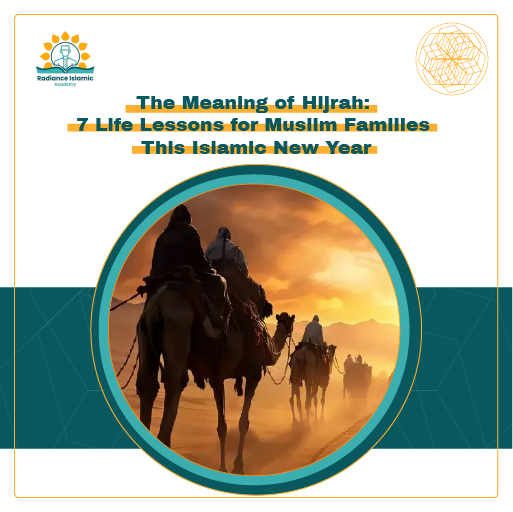
The meaning of Hijrah refers to the historical migration of Prophet Muhammad ﷺ from Makkah to Madinah in 622 CE. Beyond its major historical significance, Hijrah represents sacrifice, faith, resilience, and the willingness to leave behind what harms our relationship with Allah in pursuit of a better, purer life.
Because of this constant modern pressure, understanding the deep Hijrah meaning in Islam becomes a quiet sanctuary for Muslim families. This special season offers every one of us a fresh, clean page. It invites us to start over, heal our hearts, and build better spiritual habits at home.
🎯 Featured Snippet Box: 7 Key Lessons from the Hijrah Story
- Faith Before Comfort: Prioritizing your relationship with Allah over temporary worldly ease.
- Intentions Matter Most: Aligning your heart’s hidden desires with pure spiritual goals.
- Absolute Trust in Allah: Knowing that Allah provides safety in ways we cannot see.
- Patience Through Hardship: Facing temporary adjustment struggles with a calm soul.
- Family Unity: Supporting your spouse and children through life’s heavy transitions.
- True Brotherhood: Building a welcoming, loving, and supportive community.
- Embracing New Beginnings: Recognizing that a fresh start is always possible with Allah.
2. Moving Forward with Intention and Hope
The Significance of Hijrah: Leaving Comfort for True Peace
Hijrah was not only a physical movement from one city to another. It was a movement from fear to safety, from pressure to purpose, and from hardship to the building of a new Muslim community. Understanding this deep history helps us navigate our own modern struggles.
               [ The Personal Hijrah Loop ]

     Leaving Bad Habits ---> Facing Early Struggles ---> Building Stronger Faith
     Result:             Finding Inner Peace ---> Creating a Blessed Home
The True Courage of Starting Over in a New Place

The historical journey of the migration of Prophet Muhammad ﷺ from Makkah was filled with physical difficulty. The early Muslims left their comfortable homes, their wealth, and in many cases their close families behind. They walked into the unknown because they loved Allah and His Messenger ﷺ deeply.
This teaches us a beautiful truth about our lives today: true change often requires leaving comfort. To completely understand this spiritual path, we must look at how the Prophet ﷺ expanded the definition of migration for future generations. He taught us that the essence of migration lives within the human heart. The Messenger of Allah ﷺ said:
“The Muslim is the one from whose tongue and hand the Muslims are safe, and the Emigrant (Muhajir) is the one who leaves (Hajara) what Allah has forbidden.” (Sahih al-Bukhari)
This means that even though physical migration to Madinah is no longer an obligation after the historic Conquest of Makkah, the spiritual Hijrah remains entirely alive until the end of time. It is a daily, internal movement of walking away from poor habits and negative thoughts. When a family family consciously chooses faith over popularity, they are living the true spirit of migration. This willingness to prioritize devotion connects beautifully with other moments of sacrifice across our traditions, such as the core values we pass down during Eid al-Adha for Muslim Families.
Turning Family Challenges into Beautiful New Blessings
When the Muhajirun arrived in Madinah, life did not become easy immediately. They faced a strange climate, unfamiliar surroundings, different water, and a completely new marketplace. Yet they did not lose hope. They worked hard, adapted gently, and trusted Allah fully.
This gives every Muslim parent a powerful lesson. Your household challenges are not permanent punishments from Allah. Financial worries, parenting stress, or spiritual inconsistency can all become a blessed part of your family’s personal Hijrah. When a family faces a difficult season with patience, Allah can replace that stress with a deeper blessing. This positive internal shift is the very first step when learning How to Build an Islamic Home Environment that nurtures the souls of your children.
3. Connecting Young Hearts to the Story
Sharing the Beautiful Hijrah Story with Your Children
| Historical Event | Ancient Desert Reality | Modern Household Lesson |
| Leaving Makkah | Sacrificing physical homes for faith | Choosing good friends over popularity |
| The Cave of Thawr | Absolute trust in Allah’s secret protection | Finding calm during school anxiety |
| The Brotherhood | Sharing wealth with complete strangers | Helping siblings and speaking kindly |
Explaining the Prophet’s Great Journey in Simple Words
Children living in the West need to hear the Hijrah story regularly. However, we should not tell it like a dry history lesson from an old textbook. We should tell it with warmth, deep emotion, and imagination. Tell your children how the Prophet ﷺ and Abu Bakr رضي الله عنه hid safely inside the Cave of Thawr while their enemies searched for them.
Allah beautifully records this moment of protection in the Quran:
“If you do not aid the Prophet – Allah has already aided him when those who disbelieved had driven him out [of Makkah] as one of two, when they were in the cave and he said to his companion, ‘Do not grieve; indeed Allah is with us.’” (Surah At-Tawbah, 9:40)
This breathtaking moment teaches children that Allah’s help can come in ways we do not expect, like a tiny spider spinning a web. It teaches them courage, trust, loyalty, and love for the Prophet ﷺ. You can make this story memorable by turning it into an interactive family activity:
                     [ The Kid-Friendly Narrative ]

   +--------------------+    +--------------------+    +--------------------+
   |   Listen to the    |    |  Draw the Spider   |    | Sing the Welcoming |
   |   Desert Adventure |--->|   Web of Protection|--->|  Ansar Song Today  |
   +--------------------+    +--------------------+    +--------------------+
When children love the vibrant history of their Deen, they naturally become more open to structured Islamic Studies for Kids. They begin to see Islam as a living, breathing story, not just information to memorize for a school test.
Turning the Islamic New Year Into a Joyful Family Tradition
Do not let the Islamic New Year pass like an ordinary day. Gather your children in the living room, bake something simple together, and decorate a small corner of your home to mark the arrival of Muharram, the first Islamic month. Ask each child to share one good habit they want to build.
When we fill Islamic occasions with warmth, children build a strong resilience against outside pressures. It helps you discover how to Raise Confident Muslim Children without making them feel isolated from society. To make this evening even more engaging for little hands, you can introduce a few creative Islamic New Year Activities for Kids that connect their hearts directly to the narrative of Madinah.
4. Setting Spiritual Household Goals
Using the New Hijri Year to Reset Your Child’s Quran Habits
The beginning of the Hijri New Year is a perfect moment to set fresh, realistic spiritual goals for your household. Many parents want their children to connect deeply with the Quran. However, they sometimes begin with too much intensity, which can cause screen fatigue, resistance, and daily arguments at the study table. Instead, use this season to begin gently.
                  [ Balanced New Year Time Tuning ]

     Quiet Family Talk (20%) ---> Gentle Verse Reading (50%) ---> Positive Praise (30%)
This emotional security often encourages children to Learn Quran Online, helping them build a deeper connection with Allah’s words. If your previous household routine was chaotic, forgive yourself and start again today. A family Hijrah does not need to be dramatic. It can begin with ten peaceful minutes each morning.
🌿 A Beautiful New Beginning
If this Islamic New Year feels like a fresh start for your family, beginning to Learn Quran Online together can be one of the most meaningful habits you build this year. It helps establish consistency without turning faith into a daily household battle.
5. Finding the Perfect Windows for Personal Growth
Practical Steps for Busy Modern Parents
A successful spiritual reset requires strategic timing. You cannot build a peaceful Islamic routine if you only try to teach when everyone is tired, hungry, or emotionally drained. Parents need to find the natural quiet windows of the day by integrating a calm Daily Islamic Routine for Muslim Families.
A Memory from a Parent’s Journal: “We used to fight with our son every evening to make him revise Quran. For the New Hijri Year, we made a small shift. We woke him up just fifteen minutes earlier in the morning. The house was completely quiet. The change was miraculous. He revised with a calm smile, and the evening fighting stopped.”
                  [ Peak Spiritual Windows ]

     Early Morning Calm ---> Reduced Screen Exposure ---> Restful Bedtime Dhikr
For many families, choosing the Best Time of Day for Quran Memorization changes everything. It improves focus, retention, and emotional comfort. If you are unsure whether your child is ready for structured memorization, our guide on The Best Age to Start Hifz for Kids can help you understand readiness from both a spiritual and developmental perspective.
For families who want a fully guided path, a gentle Hifz Program helps children build consistency without pressure. As children grow, specialized Arabic Classes for Kids can also support their understanding of Quranic words, helping them connect deeply with the meaning rather than only the sound.
6. Living in the Modern World
Why Is Hijrah Still Relevant for Muslims Living in the West?
Living as a Muslim family in the West can sometimes feel like a daily emotional and spiritual Hijrah. Parents and children must constantly make difficult, intentional choices about what they watch, who they spend time with, and how they respond to peer pressures at school.
                       [ Historical Timeline of Islam ]

   610 CE (First Revelation) ---> 613 CE (Public Da'wah) ---> 622 CE (The Hijrah)
                                                                    |
   630 CE (Conquest of Makkah) <--- 624 CE (Battle of Badr) <-------+
The historical milestones of our Deen show us that building an Islamic calendar was fundamentally about honoring a community’s struggle to find a safe home for their faith. Hijrah reminds us that being a minority is not a new challenge. The Prophet ﷺ and his companions built a beautiful community in Madinah by being spiritually grounded, completely honest, generous, and excellent neighbors to non-Muslims.
Therefore, balancing dunya and deen is not about isolating your children from the world. It is about anchoring their hearts so deeply in faith that they can move through the world with confidence. A child who knows the true story of Hijrah learns how to be brave, principled, patient, and deeply hopeful.
7. Deepening Our Understanding of the Hijri Calendar
Why Is the Hijrah the Beginning of the Islamic Calendar?
When the companions of the Prophet ﷺ gathered during the caliphate of Umar ibn al-Khattab رضي الله عنه to establish an official calendar, they debated where it should begin. Some suggested using the birth year of the Prophet ﷺ, while others suggested the year of his death or the year of the first revelation.
Ultimately, they chose the year of the Hijrah. They did this because the Hijrah was the turning point that clearly separated truth from falsehood. It was the moment Islam transformed from a small group of persecuted individuals into a fully established society based on justice, mercy, and brotherhood. By anchoring the Hijri calendar to this specific event, Muslims are reminded every single year that our community is built upon sacrifice, movement, and continuous renewal.
8. Direct Answers to Common Questions
Answer: The Islamic New Year is important because it reminds Muslims of renewal, sacrifice, and the beginning of the Islamic calendar. It marks the historic migration that allowed the Muslim community to grow in safety, worship, brotherhood, and justice.
Answer: During the Hijrah, Prophet Muhammad ﷺ and his followers migrated from Makkah to Yathrib, later known as Madinah, after enduring years of severe persecution. This journey became the official starting point of the lunar calendar.
Answer: The Prophet ﷺ migrated because the pagan leaders of Makkah refused freedom of worship, persecuted the early Muslims, and eventually plotted to kill him. By Allah’s divine permission, the Hijrah opened the door to building a safe Muslim community.
Answer: Hijrah is the actual historical event of the migration. The Islamic New Year is the calendar milestone that marks the start of a new lunar cycle, beginning from that historic migration year.
Answer: Yes. Muharram is the first month of the Islamic calendar. The first day of Muharram marks the beginning of the new Hijri year. To understand this month more deeply, read our detailed article: What Is Muharram? Why Is It the First Month of the Islamic Calendar?.
Conclusion: Walking the Path Together
At the end of the day, the Islamic New Year is a beautiful gift for the modern Muslim soul. It reminds us that no matter how many mistakes we made last year, the door of Allah is always open. We do not need to carry past guilt into the future. We do not need to repeat the same broken routines, nor do we need to wait for a perfect moment to change. Hijrah teaches us that change is possible the moment the heart turns back to Allah.
Look at your spouse and children with hope today. Keep your home warm, calm, and filled with gentle words. Take one small step forward this week. Fix one routine, smile more during lessons, start one short Quran habit, and make one sincere dua together. May this new Hijri year bring peace, protection, stronger faith, and beautiful spiritual growth to your blessed household.
📚 Continue Reading: The Narrative Funnel
If you want to follow the natural story of how our faith took root and how it shapes our lives today, explore these interconnected chapters next:
- The Core Story: What Is Muharram? Why Is It the First Month of the Islamic Calendar? – Discover why this specific month opens our year.
- The Sacred Timing: The Significance of the Islamic Calendar – Learn how the lunar cycles guide our spiritual growth.
- The Practical Next Step: Islamic Studies for Kids – How to bring these beautiful historical narratives into your child’s daily worldview smoothly.