



Learn Quran online with qualified teachers when you want lessons that are structured, corrected, and matched to your real level.
A qualified Quran teacher should do more than attend the class or follow a fixed lesson plan.
The teacher should understand where the student is starting, identify the main weakness, correct mistakes clearly, and explain what should happen next.
That matters for beginners, children, Tajweed learners, Hifz students, adults, and students who want better recitation or understanding.
“Qualified” should not mean only a certificate, title, or profile description.
It should appear in the way the teacher assesses, teaches, corrects, communicates, and reviews progress.
This article explains what it should look like to learn Quran online with qualified teachers before you or your child enroll.
Quick Answer: How to Learn Quran Online with Qualified Teachers
You can learn Quran online with qualified teachers when the program does more than assign the first available teacher.
A strong teacher-led program should:
- Assess the student’s current Quran level.
- Identify the main learning goal.
- Match the student with relevant teacher experience.
- Explain the first correction priority.
- Give short practice between lessons.
- Review whether mistakes are decreasing.
- Adjust the plan when progress slows.
Do not enroll only because a website says its teachers are qualified.
A trustworthy provider should explain how teacher knowledge becomes corrected, measurable progress for you or your child.
Where Qualified Quran Teachers Fit in the Learn Quran Online Path
For the full learning-path overview, start with Learn Quran Online: A Step-by-Step Guide for Every Level.
To understand what teacher quality looks like during lessons, continue with What Makes a Good Online Quran Teacher?.
Students comparing credentials can review Do Quran Teacher Qualifications Really Matter?.
Teacher selection is covered in How to Choose an Online Quran Teacher.
Teacher standards can be checked directly through the Teachers Page.
To start with placement and teacher fit, use the Free Quran Assessment / Trial.
This article focuses only on one trust question:
what qualified teacher-led Quran learning should look like online, from assessment and correction to practice, progress, and the next learning step.
Qualified Quran Teachers Should Make Progress Clear
A qualified teacher should help the student understand what is improving and what still needs work.
That may include reading accuracy, pronunciation, Tajweed application, Hifz revision, recitation confidence, or beginner foundations.
The lesson should not feel random.
The student should know the current focus.
Parents should understand what was corrected and what should be practised before the next class.
Adult learners should leave the lesson with clear feedback, not vague encouragement only.
Strong teacher-led learning turns qualification into visible progress.
That is the difference between a teacher who simply has knowledge and a teacher who can use that knowledge to help the student improve.
What Should “Qualified Quran Teacher” Mean in Practice?
A qualified teacher should combine subject knowledge with the ability to teach the student’s exact goal.
| Learning Need | Relevant Teacher Strength | Evidence During Lessons |
|---|---|---|
| Beginner reading | Foundation teaching | Student guesses less and reads more accurately |
| Pronunciation | Sound correction | Corrected sounds transfer into words |
| Tajweed | Applied rule knowledge | Rules improve during actual recitation |
| Hifz | Revision management | Older portions remain stable |
| Children | Child-friendly teaching | The child participates actively |
| Adults | Respectful correction | The learner reads with greater confidence |
The word “qualified” becomes meaningful only when it changes how the teacher assesses, corrects, and supports the learner.
For a deeper credential analysis, continue with Do Quran Teacher Qualifications Really Matter?
Qualified Teaching Begins with Diagnosis and Correction
The teacher should first identify:
- The current reading or recitation level
- The main repeated weakness
- The suitable starting point
- The first measurable goal
Then the lesson should follow this process:
Student performs
↓
Teacher identifies the main mistake
↓
Teacher models the correction
↓
Student tries again
↓
Student applies it in a new example
↓
Teacher checks it in a later lesson
The most important step is application.
Repeating the teacher’s exact example may show imitation.
Using the correction independently in another word, line, or portion shows learning.
After assessment, the student or parent should understand:
- Where the student is starting
- Why that level was chosen
- What will be corrected first
- What should be practised
- How progress will be checked
Qualified Teachers Should Match the Student’s Goal
For Beginners
Beginners may need support with:
- Letters and vowels
- Joining
- Short-word reading
- Guessing
- Reading confidence
A qualified beginner teacher should be able to slow down and repair foundations without making the learner feel that they have failed.
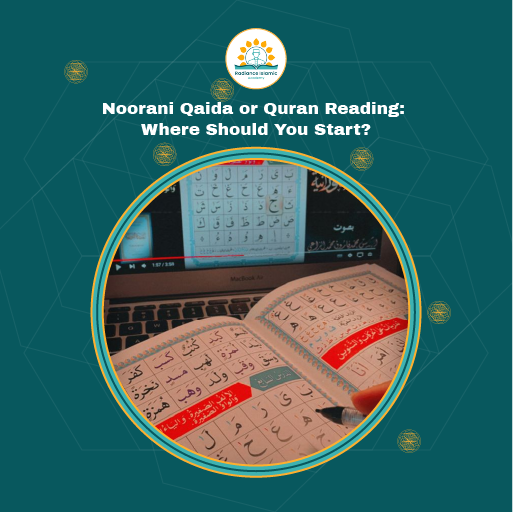
If you are unsure whether to begin with Qaida or direct Quran reading, Noorani Qaida or Quran Reading: Where Should You Start? explains how to choose the right starting point.
For Children
Children may need:
- Short active turns
- Gentle correction
- Simple instructions
- Parent communication
- Suitable lesson length
- Safe professional boundaries
The same teaching style should not be used for an adult beginner, a young child, and an advanced reciter.
Teacher matching should be based on the learner’s current need, not only age or availability.
For child-focused class selection, Best Online Quran Classes for Kids explains how parents can compare teacher quality, safety, class format, and trial lessons.
Qualified Teachers for Tajweed and Hifz
Tajweed
A qualified Tajweed teacher should correct rules during actual recitation.
The teacher should check:
- Articulation
- Repeated pronunciation errors
- Rule application
- Pauses
- Whether correction transfers into another passage
For a focused Tajweed path, Learn Quran Online with Tajweed explains how Tajweed should be built gradually through teacher correction.
Hifz
A qualified Hifz teacher should track:
- New memorization
- Recent revision
- Older revision
- Prompt dependence
- Pronunciation
- Retention over time
If revision becomes weak, the teacher should reduce new memorization instead of continuing at the same pace.
For child memorization planning, Complete Guide to Quran Memorization for Kids explains why revision and retention matter more than simply adding new portions.
Evidence That Qualified Teaching Is Working
After several lessons, look for evidence:
| Area | Evidence of Progress |
|---|---|
| Reading | Fewer repeated mistakes |
| Pronunciation | Corrected sounds appear in new words |
| Tajweed | Rules are applied during recitation |
| Hifz | Revision remains stable |
| Confidence | The student participates more comfortably |
| Practice | Tasks are specific and completed |
| Direction | The next goal is clear |
| Teaching fit | The plan changes when needed |
Attendance, lesson count, and completed pages do not prove teacher quality by themselves.
The strongest evidence is that the learner needs fewer prompts and applies correction more independently.
What Should You Know Before Enrolling?
Before payment or long-term enrollment, the provider should explain:
- How the assessment works
- How teachers are matched
- Whether the teacher has experience with your goal
- What happens during a trial or first lesson
- How progress is reviewed
- What home practice is expected
- Whether teacher changes are possible
- How child safety and communication are managed
A qualified-teacher claim should be supported by a clear learning and support system.
For a full pre-hiring checklist, continue with Questions to Ask Before Hiring a Quran Teacher.
A Simple Enrollment Path
A clear teacher-led program should follow this path:
Level assessment
↓
Goal and starting point identified
↓
Teacher match recommended
↓
Trial or first lesson
↓
Correction and practice plan
↓
Progress review
Before continuing, the learner or parent should understand the starting point, teacher fit, first goal, and how improvement will be measured.
Learn Quran Online with Qualified Teachers at Radiance Islamic Academy
At Radiance Islamic Academy, the learning process should begin with an assessment rather than a random class placement.
The assessment can identify:
- Quran reading level
- Pronunciation needs
- Tajweed readiness
- Hifz and revision needs
- Suitable teacher experience
- Available schedule
- First measurable goal
After assessment, the student or parent should receive a recommendation explaining:
- The current level
- The suitable learning path
- The recommended teacher fit
- The first correction priority
- The home-practice task
- How progress will be reviewed
This helps the learner understand why the teacher, lesson path, and first goal were recommended instead of receiving a random class placement.
Start with a Free Quran Assessment
A free assessment can help identify:
- Your current level
- Your main learning goal
- The teacher experience you need
- The suitable lesson format
- Your first measurable target
You should receive a clear recommendation before regular lessons begin.
Learn More About Radiance Islamic Academy
Students and parents can visit Radiance Islamic Academy’s official Facebook, Instagram, and WhatsApp channels to review academy updates, communication, and enrollment information.
The final decision should still depend on assessment quality, teacher fit, correction, safety procedures, and measurable progress.
Common Mistakes When Looking for Qualified Quran Teachers Online
Avoid these mistakes:
- Trusting the word “qualified” without evidence
- Choosing only by price or availability
- Skipping the level assessment
- Ignoring whether teacher experience matches the goal
- Accepting vague correction
- Choosing Tajweed without applied recitation feedback
- Choosing Hifz without revision tracking
- Measuring progress only by attendance or completed pages
- Ignoring teacher-child fit
- Enrolling without understanding teacher-change or missed-lesson policies
Qualified teaching should produce a clearer learning path.
Not only regular classes.
Frequently Asked Questions
Yes.
Choose a program that assesses your level, matches the teacher to your goal, gives live correction, and tracks measurable progress.
A qualified teacher should have relevant Quran knowledge, suitable teaching experience, clear correction skills, and a method for reviewing progress.
Yes.
Beginners need teachers who can identify weak foundations and build letters, vowels, joining, and reading confidence gradually.
Yes.
Tajweed teachers should correct rules during recitation, while Hifz teachers should manage new memorization, revision, prompts, and retention.
Ask how the teacher’s experience matches your goal, observe the correction method during a trial, and check whether the provider explains assessment, practice, and progress tracking clearly.
Conclusion: Qualified Teaching Should Be Visible in the Learning Process
Learning Quran online with qualified teachers should provide more than access to a teacher profile.
The program should show:
- How your level is assessed
- Why the teacher matches your goal
- What will be corrected first
- What you should practise
- How progress will be measured
- What happens when the plan needs adjustment
For beginners, qualified teaching may mean foundation repair.
In educating children, it may mean active and gentle lessons.
For Tajweed, it means applied recitation correction.
For Hifz, it means protecting revision and retention.
Choose a program where teacher knowledge becomes clear correction, suitable practice, and measurable progress.
Next Step
If you want to choose a teacher carefully, continue with How to Choose an Online Quran Teacher.
If you want to understand teacher quality, continue with What Makes a Good Online Quran Teacher?
When verifying credentials, continue with Do Quran Teacher Qualifications Really Matter?
If you want to learn Quran online with qualified teachers, begin with a Free Quran Assessment.