


Do Quran teacher qualifications really matter? Yes, but they matter most when they match what the student is trying to learn.
Quran teacher qualifications can show whether a teacher has studied Quran reading, Tajweed, Hifz, Arabic, or meaning-focused learning.
But a certificate, title, or long experience list does not automatically prove that the teacher can diagnose mistakes, explain clearly, correct gently, or help the student improve.
A teacher may have strong Tajweed knowledge but struggle to teach a complete beginner.
Another teacher may work well with adults but not understand how to keep a child active and confident.
Strong qualifications are valuable when they support real teaching: accurate correction, clear planning, suitable pacing, and measurable progress.
This article explains when Quran teacher qualifications matter, what parents and students should check, and how to know whether a teacher’s credentials are actually helping the learner.
Quick Answer: Do Quran Teacher Qualifications Really Matter?
Yes, Quran teacher qualifications matter because they help show whether the teacher has the knowledge needed for Quran reading, pronunciation, Tajweed, Hifz, Arabic, or meaning-focused learning.
But qualifications are not enough by themselves.
A useful qualification should:
- Match the student’s learning goal
- Support accurate Quran correction
- Help the teacher diagnose mistakes
- Guide suitable lesson planning
- Improve the student’s confidence and clarity
- Lead to measurable progress over time
The strongest teacher combines:
- Relevant knowledge
- Teaching skill
- Clear correction
- Student fit
- Professional communication
- Progress tracking
Do not ask only:
“Is this teacher qualified?”
Ask:
“Qualified for what, and can this teacher use that knowledge to help the student improve?”
Where Quran Teacher Qualifications Fit in the Learn Quran Online Path
For the full learning-path overview, start with Learn Quran Online: A Step-by-Step Guide for Every Level.
To understand teacher quality beyond credentials, continue with What Makes a Good Online Quran Teacher?.
Students choosing a teacher can use How to Choose an Online Quran Teacher.
Parents selecting a child-friendly teacher may also review How to Choose the Right Online Quran Teacher for Your Child.
Teacher standards can be checked directly through the Teachers Page.
This article focuses only on one question:
how much Quran teacher qualifications matter and how to judge whether credentials are connected to real correction, teaching skill, and student progress.
Quran Teacher Qualifications Should Match the Learning Goal
Not every qualification proves the same kind of teaching ability.
A teacher qualified in Tajweed may be strong for recitation correction, but the student may still need someone patient with beginner reading.
Hifz students need a teacher who can listen carefully, track mistakes, manage revision, and protect old memorization.
Children need more than knowledge; they need age-appropriate teaching, clear instructions, gentle correction, and confidence support.
Adults may need privacy, structured feedback, flexible pacing, and direct explanation.
The better question is not whether the teacher has qualifications in general.
It is whether those qualifications help with the student’s current Quran learning need.
What Counts as a Quran Teacher Qualification?
Quran teacher qualifications may include different forms of study, authorization, experience, and training.
| Qualification or Experience | What It May Show |
|---|---|
| Quran reading study | Knowledge of reading foundations |
| Tajweed study | Understanding of recitation rules |
| Ijazah or sanad | Formal authorization in a recitation path |
| Hifz completion | Personal memorization experience |
| Arabic study | Language support and deeper understanding |
| Teaching experience | Ability to work with students |
| Child-teaching experience | Ability to adapt to younger learners |
| Training or supervision | Greater teaching consistency |
Not every student needs the same qualification.
The correct credential depends on the learning goal.
A complete beginner may need a teacher skilled in foundations.
A Tajweed learner may need a teacher strong in applied recitation correction.
A Hifz student may need a teacher who understands revision and retention.
A child may need a teacher who can combine knowledge with patience, engagement, and parent communication.
Match Qualifications to the Student’s Goal
Quran teacher qualifications matter most when they match the student’s actual goal.
| Student Goal | What to Look For |
|---|---|
| Beginner reading | Foundation-teaching experience |
| Quran reading fluency | Strong live reading correction |
| Pronunciation | Clear sound modeling and application |
| Tajweed | Tajweed knowledge plus applied correction |
| Hifz | Memorization and revision-management experience |
| Children | Child-friendly teaching and parent communication |
| Meaning or Arabic | Relevant Arabic knowledge and reliable explanation |
A teacher may be highly qualified in one area and unsuitable in another.
For example:
- An advanced reciter may not be the best beginner teacher.
- A patient child teacher may not be qualified for advanced Tajweed.
- A Hafiz may still need a clear revision system to teach Hifz well.
The qualification should match the student’s real goal.
For the broader teacher-selection process, How to Choose an Online Quran Teacher explains how to compare teacher fit, trial lessons, correction style, and progress tracking.
Qualifications Should Improve the Teacher’s Correction
The value of a qualification appears during teaching.
A qualified teacher should be able to:
Hear the student
↓
Identify the exact mistake
↓
Explain or model the correction
↓
Let the student repeat
↓
Check the correction in a new example
↓
Review it in a later lesson
Qualifications lose practical value when the teacher:
- Gives vague correction
- Cannot explain the mistake
- Corrects too many things at once
- Does not check application
- Moves forward while the same problem continues
The credential should support better diagnosis and correction.
It should not replace them.
If the student keeps repeating the same mistake, the issue may not be the certificate itself. It may be that the knowledge is not being translated into clear teaching.
Qualifications Must Match the Teaching Environment
An online Quran teacher needs both Quran knowledge and the ability to teach effectively through a screen.
For online teaching, look for:
- Clear audio-based correction
- Active student participation
- Short focused turns
- Specific home practice
- Progress tracking
- Professional communication
For children, also look for:
- Age-appropriate pacing
- Gentle correction
- Parent communication
- Safe lesson boundaries
- Ability to notice tiredness or confusion
A knowledgeable teacher may still be unsuitable if they cannot teach online or work well with children.
For child-focused class selection, Best Online Quran Classes for Kids explains how parents can compare teacher quality, safety, class format, and trial lessons.
Qualifications for Tajweed and Hifz
Tajweed
A Tajweed teacher should have relevant knowledge and be able to apply it during real recitation.
Check whether the teacher can:
- Hear repeated mistakes
- Model the correction
- Explain rules at the student’s level
- Check application in new passages
- Avoid overloading beginners
The question is not only:
“Does the teacher know Tajweed?”
It is:
“Can the teacher help this student apply Tajweed correctly during recitation?”
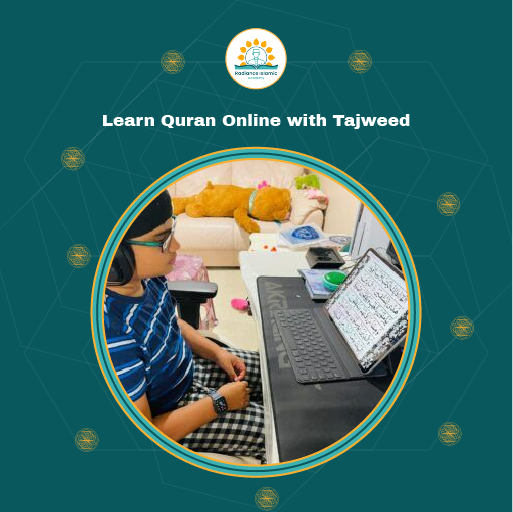
For a deeper learning path, Learn Quran Online with Tajweed explains how Tajweed should be built gradually through live correction and practice.
Hifz
A Hifz teacher should understand more than new memorization.
They should track:
- New memorization
- Recent revision
- Older revision
- Prompt dependence
- Pronunciation
- Retention over time
The teacher’s background should support the complete learning system, not only the headline qualification.
If a child is memorizing Quran, Complete Guide to Quran Memorization for Kids explains why retention and revision matter more than simply adding new portions.
Qualifications and Teaching Skill Must Work Together
Qualifications and teaching skill are not the same thing.
Both matter.
| Qualification Shows | Teaching Skill Shows |
|---|---|
| What the teacher studied | How clearly they explain |
| Tajweed knowledge | Whether correction is applied |
| Hifz background | Whether revision is managed |
| Arabic knowledge | Whether meaning is explained appropriately |
| Formal preparation | Whether progress becomes measurable |
Ask practical questions:
- What levels do you usually teach?
- What is your strongest teaching area?
- How do you correct repeated mistakes?
- How do you track progress?
- How do you decide when a student should move forward?
- What should the student practise between lessons?
A qualification should be connected to a clear teaching method.
If the method is unclear, the credential alone may not help the student.
The Qualification-to-Outcome Test
Use this test before giving a credential too much weight.
| Question | What It Reveals |
|---|---|
| Does the qualification match the goal? | Relevance |
| Can the teacher diagnose the student? | Practical understanding |
| Can the teacher explain the mistake? | Teaching clarity |
| Can the student apply correction? | Learning transfer |
| Are repeated mistakes decreasing? | Real outcome |
| Is progress being tracked? | Teaching accountability |
A qualification is valuable when it improves the student’s learning outcome.
If the credential is impressive but correction remains vague and progress is unclear, it should not decide the choice alone.
Quran Teacher Qualification Red Flags
Be careful when:
- Qualifications are mentioned but not explained
- Credentials do not match the student’s goal
- The teacher cannot describe the correction method
- Tajweed is taught only as theory
- Hifz is taught without revision tracking
- Children remain passive
- Progress is measured only by pages
- The teacher cannot adjust the lesson
- Titles are used instead of evidence of teaching
- The student remains stuck despite repeated lessons
One missing credential does not automatically make a teacher unsuitable.
But unclear qualifications plus weak teaching is a serious concern.
Quran Teacher Qualification Check
Use this check before choosing a teacher.
| Question | Strong Sign |
|---|---|
| Does the qualification match the goal? | Experience is relevant |
| Can the teacher assess the student? | Starting level is clear |
| Can the teacher correct specifically? | Mistakes are diagnosed |
| Can the teacher teach this age group? | Method fits the learner |
| Can the teacher track progress? | Improvement is measurable |
| Can the teacher adjust the plan? | Teaching is responsive |
| Can the student apply correction? | Knowledge transfers into skill |
The goal is not to collect titles.
It is to find the teacher whose knowledge produces corrected progress.
How Radiance Islamic Academy Reviews Teacher Qualifications and Fit
After understanding why qualifications matter, the practical question becomes:
“How can an academy match teacher credentials with the student’s real need?”
At Radiance Islamic Academy, teacher matching should be based on the student’s current level, age, learning goal, confidence, correction needs, and schedule.
During an assessment, the teacher can check:
- Quran reading level
- Pronunciation needs
- Recitation confidence
- Tajweed readiness
- Hifz and revision needs
- Child attention needs
- Required teacher experience
- First measurable goal
After the assessment, the student or parent should receive a clear recommendation explaining:
- The current level
- The main learning goal
- The teacher experience required
- The first correction focus
- The suitable lesson style
- How progress will be checked
Learn More About Radiance Islamic Academy
Students and parents can visit Radiance Islamic Academy’s official Facebook, Instagram, and WhatsApp channels to see academy updates, announcements, communication style, and how learners can ask questions before choosing a teacher or class.
These official channels provide an additional view of the academy’s communication. However, the main decision should still depend on teacher qualifications, teaching skill, assessment, correction, safety, and measurable progress.
Common Mistakes When Checking Quran Teacher Qualifications
Avoid these mistakes:
- Choosing only by title
- Ignoring whether the qualification matches the goal
- Assuming Ijazah alone proves teaching skill
- Ignoring correction quality
- Choosing Tajweed without applied recitation feedback
- Choosing Hifz without revision tracking
- Ignoring child-teaching experience
- Judging only by friendliness
- Measuring progress only by pages
- Continuing when mistakes do not improve
- Confusing knowledge with teaching ability
- Giving more weight to credentials than student outcomes
Qualifications matter.
But they should lead to better teaching.
Frequently Asked Questions
Yes.
They help show subject knowledge and preparation, but they should match the student’s learning goal.
It depends on the goal.
Beginner reading, Tajweed, Hifz, children, Arabic, and meaning-focused learning may require different teacher strengths.
No.
Ijazah can show formal recitation authorization, but teaching also requires clear correction, patience, communication, and progress tracking.
Yes.
A Tajweed teacher should understand the rules and be able to correct their application during actual recitation.
Check correction quality, teaching style, student engagement, home practice, progress tracking, age-group experience, and whether mistakes decrease over time.
Conclusion: Qualifications Matter When They Improve Learning
Quran teacher qualifications matter.
They show knowledge, study, and preparation.
But the qualification must match the student’s goal and appear in real teaching.
A strong teacher should:
- Diagnose the student’s level
- Explain mistakes clearly
- Model correction
- Check application
- Give focused practice
- Track progress
- Adjust the plan
A title may prove that the teacher studied.
Student progress shows whether that knowledge is being taught effectively.
Choose the teacher whose qualifications support corrected, measurable learning—not the teacher with the longest list of titles.
Next Step
If you want to choose a teacher step by step, continue with How to Choose an Online Quran Teacher.
If you want to understand teacher quality beyond credentials, continue with What Makes a Good Online Quran Teacher?
When evaluating teacher suitability for a child, continue with Best Online Quran Classes for Kids.
If you are unsure what teacher qualification fits your goal, begin with a Free Quran Assessment.