


How to start reading Quran from zero begins with a simple truth: you do not need to read full Quran pages on day one.
You need to build the first reading foundation step by step.
That may mean learning Arabic letters, short sounds, vowel marks, joining letters, and simple Quranic words before opening longer passages from the Mushaf.
Some beginners feel discouraged because the page looks unfamiliar.
Some parents worry because their child can repeat short surahs by listening but cannot read the words yet.
That is normal.
Listening is helpful, but reading needs its own foundation.
This article explains how a beginner can move from “I cannot read yet” to reading simple Quranic words with guidance, confidence, and the right pace.
Where This Fits in the Learn Quran Online Path
For the full learning-path overview, start with Learn Quran Online: A Step-by-Step Guide for Every Level.
When the initial starting point remains unclear, continue with Where Should a Quran Beginner Start?.
If you are choosing between Noorani Qaida and direct Quran reading, continue with Noorani Qaida or Quran Reading: Where Should You Start?.
If you are starting completely online from the beginning, continue with How to Learn Quran Online as a Complete Beginner.
This article focuses only on one practical goal:
how to begin reading Quran from zero without rushing into pages, Tajweed, or memorization before the reading foundation is ready.
A Note for Parents
If your child cannot read Arabic letters yet, do not panic.
Many children begin with listening, repetition, letter recognition, short sounds, and simple words before they read from the Mushaf.
That does not mean the child is behind.
It means the child is building the skill in the right order.
The goal is not to make the first month look impressive.
The goal is to make the first steps stable, calm, and repeatable.
A slower foundation often protects confidence better than pushing a child into Quran pages too early.
Quick Answer: How Do You Start Reading Quran from Zero?
To start reading Quran from zero, begin with Arabic letter recognition, then learn correct sounds, vowel marks, joining letters, short words, and guided reading with a teacher.
Do not begin with full Quran pages if you cannot recognize letters yet.
A simple starting path looks like this:
Recognize Arabic Letters
↓
Learn Correct Letter Sounds
↓
Understand Vowel Marks
↓
Join Letters into Words
↓
Read Short Quranic Words
↓
Practise with Teacher Correction
↓
Move Slowly into Quran Reading
The key is not speed.
The key is accuracy, confidence, and consistency.
Step 1: Do Not Start from the Mushaf Too Early
Many beginners make the same mistake.
They open the Quran and try to read full lines immediately.
The intention is beautiful, but the starting point may be too advanced.
If a student cannot recognize letters, understand vowels, or join words, full Quran pages can feel overwhelming.
This often leads to guessing.
And guessing can create frustration.
Start from the Smallest Missing Skill
| If You Cannot… | Start With… |
|---|---|
| Recognize letters | Arabic alphabet |
| Say letters correctly | Letter sounds |
| Read short sounds | Vowel marks |
| Join letters | Connected words |
| Read simple words | Short Quranic words |
| Read without guessing | Guided correction |
The first goal is not to read a full page.
The first goal is to stop guessing.
Step 2: Learn the Arabic Letters Properly
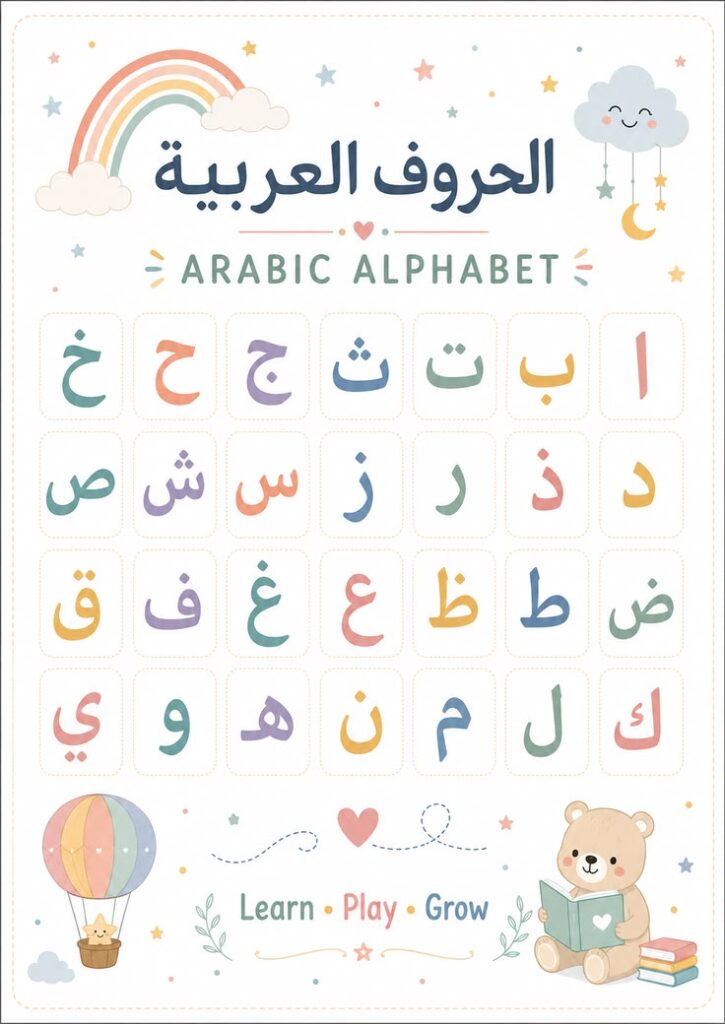
Reading Quran from zero begins with Arabic letters.
But learning letters is not only memorizing their names.
A beginner needs to know:
- What each letter looks like
- How it sounds
- How similar letters differ
- How letters change shape inside words
- Which letters are often confused
- How to pronounce letters clearly
Some letters may look similar but sound different.
Some letters may sound close to a beginner’s ear.
That is why this stage needs patience.
A strong foundation here makes everything after it easier.
Step 3: Learn Short Sounds Before Long Words
After letters, the next step is short sounds.
This usually means learning vowel marks such as fatha, kasra, and damma.
For a beginner, this is where reading begins to feel real.
The student moves from seeing a letter to reading a sound.
For example:
Letter
↓
Letter with vowel
↓
Short sound
↓
Joined sound
↓
Word
This stage should be slow and repetitive.
A child may need to say the same sound many times.
An adult may need to repeat similar letters until the difference becomes clear.
That repetition is not failure.
It is how reading becomes familiar.
Step 4: Practise Joining Letters
Many students know individual letters but cannot read words.
This is usually because they have not practised joining.
Arabic letters change shape depending on whether they appear at the beginning, middle, or end of a word.
So the student must learn how letters connect.
This is the bridge between letter recognition and Quran reading.
Joining Practice Should Include
| Practice Type | Why It Helps |
|---|---|
| Two-letter combinations | Builds confidence |
| Three-letter words | Trains the eye |
| Similar letter patterns | Reduces confusion |
| Repeated short words | Builds fluency |
| Teacher correction | Prevents guessing |
This is where many beginners benefit from structured material.
If you are unsure whether to use Noorani Qaida before Quran reading, Noorani Qaida or Quran Reading: Where Should You Start? explains that decision more clearly.
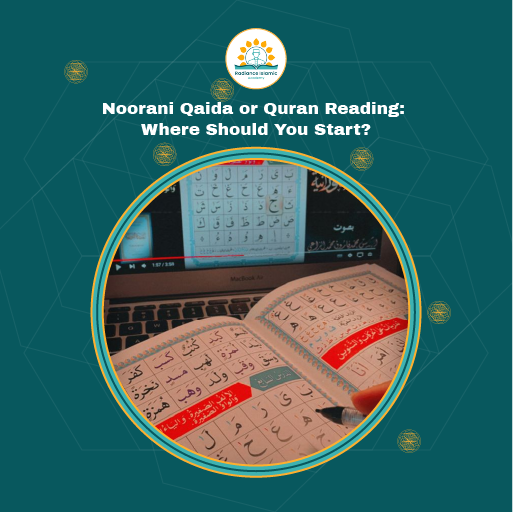
Step 5: Use Short Quranic Words Before Full Lines
Once the student can join letters, the next step is short Quranic words.
This feels more meaningful than isolated practice because the student begins to see words that appear in Quran reading.
But the portions should still be small.
Do not rush into long ayat too early.
A good teacher may begin with:
- Short words
- Repeated word patterns
- Familiar sounds
- Simple corrections
- Slow reading
- One mistake at a time
The student should feel:
“I can read this slowly.”
Not:
“I am lost.”
That emotional difference matters.
First 30 Days: A Simple Quran Reading Starter Plan
The first month should focus on building comfort, not proving speed.
Here is a simple structure.
First-Month Reading Plan
| Week | Focus | Goal |
|---|---|---|
| Week 1 | Arabic letters and sounds | Recognize letters more confidently |
| Week 2 | Vowels and short sounds | Read simple sounds without guessing |
| Week 3 | Joining letters | Start reading short connected words |
| Week 4 | Short Quranic words | Begin guided reading with correction |
This is not a promise that every student will finish these stages in exactly one month.
Some students need more time.
Some move faster.
The point is to show the order.
A beginner needs a path, not pressure.
Not Sure If You Are Ready to Read Quran Pages?
A short assessment can show whether you should begin with letters, Noorani Qaida, short words, or guided Quran reading.
This is especially useful if:
- You know some letters but cannot read words
- Your child guesses instead of reading
- You learned years ago and forgot
- You can repeat surahs but cannot read them
- You do not know whether your level is beginner or intermediate
Start with a Free Quran Assessment before choosing a full course.
This helps you avoid starting too far ahead.
What If You Do Not Know Arabic?
You can start reading Quran from zero without speaking Arabic fluently.
But you still need Arabic reading foundations.
There is a difference between learning Arabic as a language and learning Quran reading.
Quran reading begins with letters, sounds, vowel marks, joining, and recitation practice.
Speaking Arabic is not required before the first lesson.
If this is your main concern, Can You Learn Quran Online Without Knowing Arabic? explains the difference in more detail.
Should You Use a Teacher from the Beginning?
A teacher is strongly recommended when you are starting from zero.
Why?
Because beginners often cannot hear their own mistakes.
You may think you are saying a sound correctly, but a teacher may hear a difference.
Beginners may skip a vowel without noticing
You may confuse two similar letters.
You may guess instead of reading.
A teacher can correct these issues early.
Why Teacher Correction Matters
| Without Correction | With Teacher Correction |
|---|---|
| Mistakes repeat unnoticed | Mistakes are caught early |
| Student may guess words | Student learns how to read |
| Pronunciation may weaken | Sounds become clearer |
| Progress feels random | Next step is explained |
| Confidence may drop | Student receives guidance |
Self-study can support practice.
But teacher correction protects accuracy.
How Children Should Start Reading Quran from Zero
Children need a gentle start.
A child who cannot read Arabic yet should not feel that Quran reading is a test.
They need short lessons, repetition, encouragement, and a teacher who can make the first steps feel possible.
Parents should look for:
- Short sessions
- Simple sounds
- Clear repetition
- Gentle correction
- Parent feedback
- Realistic pacing
- A teacher who understands children
If your child is starting from home and you want to compare class format, teacher quality, trial lessons, and parent support, Best Online Quran Classes for Kids gives a broader decision guide.
The goal is not only to teach the child to read.
The goal is to help the child want to continue.
Do Not Rush Toward Hifz Too Early
Some students or parents want to move quickly into memorization.
That goal is beautiful.
But if reading is still weak, Hifz may become harder later.
A student who memorizes without reading stability may depend only on listening. That can work for short portions, but long-term memorization usually needs stronger reading, correction, and revision.
Before Hifz, ask:
- Can the student read basic words?
- Are pronunciation mistakes being corrected?
- Is there a revision routine?
- Can the student repeat without guessing?
- Is the pace realistic?
For children moving toward memorization, Complete Guide to Quran Memorization for Kids explains how reading, revision, and consistency support Hifz.
How Radiance Islamic Academy Supports Students Starting from Zero
After understanding the first reading steps, the next question is practical:
“How can an academy help a beginner start without confusion?”
At Radiance Islamic Academy, the starting point should depend on the student’s actual reading level.
A student may need Arabic letters, short sounds, Noorani Qaida, beginner Quran reading, or gentle pronunciation correction before moving further.
Parents can also check how the academy communicates with families through Facebook, Instagram, or WhatsApp before choosing a class. This is not about social media popularity; it is about seeing whether communication feels clear, active, and parent-friendly.
Common Mistakes When Starting Quran Reading from Zero
Avoid these mistakes:
- Opening the Mushaf before letters are ready
- Memorizing sounds without learning to read
- Skipping vowel marks
- Rushing through joining practice
- Choosing lessons that are too long
- Comparing children with each other
- Depending only on videos
- Avoiding correction
- Expecting fluency too quickly
A beginner does not need pressure.
A beginner needs a calm sequence.
Final Checklist Before You Start Reading Quran
Before moving into Quran reading, ask:
- Can I recognize Arabic letters?
- Can I pronounce the sounds clearly?
- Do I understand basic vowels?
- Can I join letters into words?
- Can I read short words without guessing?
- Do I need Noorani Qaida first?
- Will a teacher correct my reading?
- Is my schedule realistic?
- Am I starting from the right level?
If several answers are unclear, do not guess.
Start with assessment.
Conclusion: Start Small, Then Build Reading Confidence
To start reading Quran from zero, begin with the smallest missing skill.
Letters first.
Then sounds.
Then vowels.
Start joining
Then short words.
Then guided Quran reading.
Do not rush into full pages before the foundation is ready.
A correct start may feel slower at the beginning, but it usually makes the rest of the journey easier.
The goal is not to read quickly for one week.
The goal is to build Quran reading confidence that can last.
Frequently Asked Questions
Start with Arabic letters, correct sounds, vowel marks, joining letters, short Quranic words, and guided reading with teacher correction.
Yes, you can start reading Quran without speaking Arabic fluently. But you need to learn Arabic letters, sounds, vowels, and joining first.
Yes, you can start reading Quran without speaking Arabic fluently. But you need to learn Arabic letters, sounds, vowels, and joining first.
If you know some letters but cannot join them or read short words, Noorani Qaida can be a helpful bridge before Quran reading.
It depends on the student’s level, practice, lesson frequency, and teacher support. The first goal should be accurate foundations, not speed.
Next Step
If you are unsure whether to begin with letters, Noorani Qaida, or Quran reading, start with a Free Quran Assessment.
If you want to compare online Quran programs before choosing, continue with How to Choose the Right Online Quran Program.