


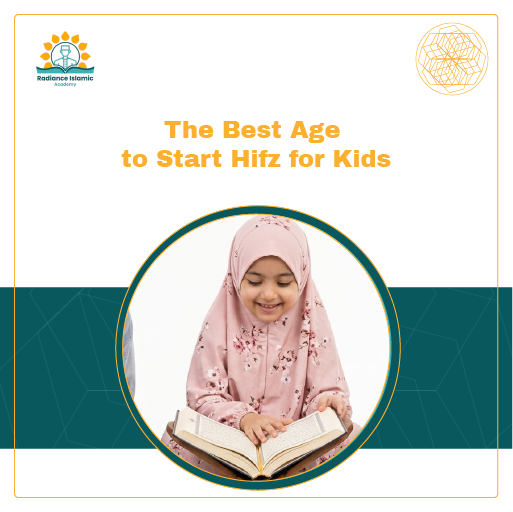
Introduction: “What is the Best Age to Start Hifz for Kids?” This is perhaps the single most frequent, anxiety-inducing question that Muslim parents pose to Islamic educators and scholars worldwide. The moment a mother notices her four-year-old beautifully mimicking a verse from Juz’ Amma, or a father watches his eight-year-old display a deep interest during weekly Quran classes, the urge to lock in a rigorous memorization schedule arises. However, this enthusiasm is often accompanied by an undercurrent of fear: Am I starting too early and risking cognitive burnout? Or have I already started too late, missing the golden developmental window?
At Radiance Islamic Academy, we encounter these parental dilemmas daily. The reality of child development dictates that age is merely a number; true readiness is a multi-dimensional spectrum that blends psychological maturity, linguistic foundational skills, and emotional stability. To understand how this specific milestone fits into a complete, structured roadmap for your family, we highly recommend reviewing our master resource: the Complete Guide to Quran Memorization for Kids. In this extensive guide, we will break down the exact biological and spiritual markers that define the absolute best time for your child to begin their lifelong relationship with the Book of Allah, ensuring their journey is filled with love, confidence, and unshakeable consistency.
1. The Cognitive Science Behind Early Quranic Memorization
Neuroplasticity and the Golden Window of Linguistic Absorption
From a strictly neurological perspective, the human brain undergoes its most explosive phase of growth and synaptic connection mapping during the first seven years of life. Young children are biologically engineered to absorb complex language patterns, phonetic accents, and auditory data without conscious effort. This incredible phenomenon is why a child can master multiple languages simultaneously if exposed to them early on.
When applied to Hifz, this means that a child who regularly listens to precise Tajweed in their toddler years will naturally absorb the difficult articulation points (Makharij) of Arabic letters. They imitate the rhythm, length of elongation (Madd), and nasalization (Ghunnah) smoothly, bypassing the heavy analytical struggles that adults typically face. This natural absorption creates an intuitive comfort with the text. However, to fully understand how this early cognitive formatting permanently transforms your child’s behavior, social skills, and spiritual identity, we highly recommend reading our deep-dive analysis on How Quran Memorization Shapes Character.
The Vital Distinction Between Auditory Familiarity and Rigorous Memorization
A critical mistake many well-meaning parents make is confusing a child’s ability to repeat a catchy nursery rhyme or a short Surah with their readiness for a structured, multi-page Hifz curriculum. Early learning should never look like an academic boot camp. Instead, the focus between the ages of 3 and 5 must be entirely on building a rich environment of active auditory familiarity.
                  [ Early Hifz Readiness Roadmap ]

     Ages 3-5: Auditory Exposure --> Ages 5-7: Structured Micro-Hifz
Before you ever ask a child to look at a physical Mus’haf and retain text line by line, they should have spent hundreds of hours listening to beautiful recitations during playtime, car rides, and bedtime routines. This foundational phase builds a deep subconscious safety net. If you skip this gentle introduction and jump straight into demanding rigorous results, you run the risk of creating a psychological block. For a structural blueprint on how to transition smoothly from passive listening to active, daily retention metrics, explore our strategic parental framework: How Many Ayahs Should a Child Memorize Daily?.
2. Age-Specific Breakdown: Analyzing the Stages of Readiness
The Preschool Phase (Ages 5 to 7) – The Era of Rapid Auditory Retention
For the vast majority of children, the age bracket of five to seven represents the sweet spot for launching a formal, yet highly adaptive, Hifz routine. At this stage, children have developed the cognitive stamina to sit and focus intentionally for short intervals of 15 to 20 minutes. Their verbal communication skills are relatively stable, and they possess an inherent love for rhythmic repetition and adult praise.
When launching a Hifz program within this age group, the premier strategic approach is to focus on securing small, rapid psychological victories. By focusing heavily on the shortest Surahs at the very end of the Quran, the child experiences a rapid cycle of achievement. They memorize a Surah, recite it proudly to their grandparents, and immediately feel a massive boost in self-esteem. However, because memory at this young age is highly volatile, these quick wins can vanish just as fast as they came if not backed by a proper system. If your child struggles to lock these early verses into their permanent memory, you must learn the psychological hidden causes explained in our diagnostic guide: Why Kids Forget Quran Quickly.
The Elementary Phase (Ages 8 to 10) – The Rise of Autonomy and Discipline
If your child is eight, nine, or ten years old and hasn’t yet started formal Hifz, take a deep breath: you have absolutely not missed the boat. In fact, starting at this slightly older age brings immense cognitive advantages that younger children simply do not possess. An eight-to-ten-year-old child has developed advanced analytical thinking, a sophisticated grasp of time management, and the ability to read Arabic texts independently using correct Tajweed rules.
Older children do not rely solely on auditory imitation; they can utilize visual memory mapping, understand the contextual narrative or story behind the Surah, and independently flag their own mistakes. They can take direct ownership of their schedules, tracking their own goals with a sense of mature pride. The challenge here shifts from maintaining basic focus to managing external life pressures. To ensure that their school demands do not crash against their spiritual goals, parents must implement a masterfully coordinated plan. Learn the exact tactics to harmonize these two worlds by reading How to Balance School and Quran Memorization.
3. Critical Readiness Indicators: Signs Your Child Is Ready

Tracking Core Linguistic, Cognitive, and Behavioral Markers
How do you know, with absolute certainty, that your child is ready to step up from a casual weekend Islamic class to a structured, daily Hifz routine? You must look for explicit behavioral and cognitive markers rather than simply relying on their chronological age. The three primary pillars of readiness are:
- Active Auditory Copying: The child can easily and accurately mimic a multi-word phrase with the correct phonetic rhythm after hearing it three or four times.
- Basic Visual/Reading Stamina: The child can recognize Arabic letter connections comfortably or shows a strong willingness to sit with a book for at least 15 uninterrupted minutes.
- Emotional Receptivity: The child associates the Quran with warmth, safety, and happiness, rather than showing immediate signs of anxiety, avoidance, or behavioral resistance when the book is opened.
If these signs are present, the runway is clear for takeoff. If these signs are absent, forcing a rigorous schedule will only backfire. For a complete, step-by-step psychological diagnostic tool to evaluate your child’s current state of mind, consult our definitive checklist on the Signs Your Child Is Struggling with Quran Memorization.
Designing a Sustainable Ecosystem for Long-Term Hifz Success
Crafting the Perfect Daily Routine and Selecting the Ideal Time Blocks
The absolute foundation of a successful Hifz journey—regardless of whether your child starts at age five or age eleven—is the preservation of a sacred, unshakeable daily routine. A common pitfall in parental strategy is running an irregular schedule: forcing the child to memorize a huge chunk of text on Saturday because the family has free time, and then ignoring the Quran entirely until Tuesday. This erratic pacing completely shatters retention and kills motivation.
       [ Peak Cognitive Alignment for Hifz ]

   Fajr/Early Morning: High Focus  --> New Memorization (Sabaq)
   Asr/After-School: Moderate Focus --> Recent Revision (Sabqi)
   Maghrib/Pre-Bed: Calm Reflection --> Old Review (Manzil)
To build a routine that lasts for years without triggering emotional fatigue, you must anchor your child’s Hifz sessions to their natural daily biometric peaks. For instance, the absolute best window for cementing brand-new verses is the early morning hours right after Fajr, when the brain is completely free from daily cognitive clutter. To see a meticulously mapped out schedule that you can download and implement today, dive straight into our Daily Hifz Routine for Children, and pair it with our scientific study on the Best Time of Day for Quran Memorization to maximize your child’s brain retention efficiency.
The Art of Positive Reinforcement: Motivation vs. Coercion
Hifz is a massive spiritual marathon that spans several years. Throughout this journey, your child’s internal motivation will naturally fluctuate; they will have golden weeks where they fly through pages, and tough months where every single verse feels like an uphill battle. During these natural low periods, the parenting style you choose will entirely dictate whether they stay on the path or abandon it with a heavy heart.
Coercion, yelling, guilt-tripping, and comparing them to their peers are catastrophic approaches that inflict deep psychological damage. Instead, master the art of positive reinforcement. Celebrate their small milestones—like completing a quarter of a Juz’—with genuine family celebrations, motivational tracking stickers, and rewards that matter to them. If you are running out of creative, non-coercive ideas to keep that inner spiritual fire burning within your child’s heart, bookmark our masterclass guide on How to Keep Kids Motivated During Hifz.
5. Overcoming Parental Pitfalls: Common Mistakes to Eliminate Immediately

Shifting Focus from the Trap of Speed to the Sanctity of Retention
In the world of professional educational strategy, we often warn parents against the toxic “speed trap.” It is incredibly common to see parents boasting about how many Juz’ their child has completed in a record number of months, only to discover later that the child cannot recite a single page correctly without a teacher constantly prompting them. Speed without structural retention is a complete illusion.
The true cornerstone of elite Hifz is an automated, highly disciplined revision system. Your child should spend roughly 70% of their total Quranic time reviewing what they already know, and only 30% acquiring new lines. If a mistake is uncovered during a review session, it should never be met with anger. It is simply data showing where the memory needs a bit more reinforcement. To ensure your home remains a safe, highly efficient learning sanctuary, take a look at our expert parental audit: Common Hifz Mistakes Parents Should Avoid.
                    [ Optimal Time Allocation in Hifz ]

              +-------------------------------------------+
              | [████████████████████████████] 70% Revision |
              | [████████████] 30% New Memorization        |
              +-------------------------------------------+
To see an inspiring, practical example of how shifting focus from speed to structured revision completely turned around a struggling student’s journey, explore our real-world Hifz Case Study: How a Child Improved in 3 Months.
6. The Role of Professional Guidance: Why Structure Matters
Leveraging Expert Mentorship Through Radiance Islamic Academy
While the home environment provides the necessary emotional safety net, the addition of a professional, external structure is what transforms a child’s potential into a structured reality. A qualified Quran teacher brings a profound understanding of child psychology, professional pedagogical pacing, and an objective perspective that parents often lose due to emotional attachment.
Enrolling your child in a premier, structured program like our Online Quran Memorization Course for Kids at Radiance Islamic Academy offers your family an elite educational framework. Our teachers are meticulously trained to provide adaptive pacing, instant Tajweed correction, and comprehensive milestone monitoring. To empower you to track this beautiful growth visually alongside our mentors, make sure to integrate our custom-designed Quran Memorization Progress Tracker for Parents into your daily family dashboard.
7. Specialized Quran Memorization FAQ for Parents
For immediate clarity on the technical nuances of starting this beautiful journey, review these critical parental questions. For a more expansive directory of answers regarding advanced scenarios, explore our full Quran Memorization FAQ for Parents.
Answer: Not necessarily. If a child is young (ages 4–6), they can begin their Hifz journey purely through a structured auditory process while simultaneously learning their basic Arabic alphabets. For older children, having a strong reading foundation is highly beneficial, but the two skills can absolutely be developed in tandem under the guidance of an expert teacher.
Answer: Yes, absolutely. Hyperactive children often possess incredible cognitive energy. The secret is to discard the traditional expectation of making them sit completely still at a desk for an hour. Utilize multi-sensory learning: let them pace around the room safely while reciting aloud, use audio tracking, and break their lessons into hyper-focused 5-minute micro-bursts throughout the day.
Answer: The timeline is entirely unique to each child’s cognitive blueprint, routine stability, and starting age. On average, a consistent, well-supported child matching a balanced routine can complete the entire Quran beautifully within 3 to 5 years. Remember, the goal is sustainable retention and lifelong love for the Quran, not a rushed finish line.
Answer: Mixing up similar verses (Mutashabihat) is an advanced cognitive milestone showing that your child’s brain is expanding its database. When this happens, do not panic or express disappointment. The absolute best technical solution is “Visual Mapping” and “Contextual Linking.” Sit with the child and color-code the differing endings in the Mus’haf, or explain the slight difference in meaning between the two verses. This structural clarification locks the distinct paths into their long-term memory instantly.
Answer: Travel and vacations are the primary reasons for Hifz regression, but you can easily prevent this by transitioning from an “Active Progress Routine” to a “Maintenance Routine.” During holidays, freeze the assignment of new verses (Sabaq) completely. Instead, focus 100% on passive review. Let your child listen to their old memorization in the car or on the plane, and secure just 10 minutes before bedtime for a quick, relaxed recitation. This keeps the “memory muscle” warm without ruining their holiday fun.
Conclusion: Seamlessly Connecting with the Source of Light
Finding the definitive Best Age to Start Hifz for Kids is ultimately not about pinpointing a rigid biological milestone or a specific birthday candle. It is about deeply observing your unique child, laying down a warm and welcoming auditory foundation at home, and stepping forward with endless patience, consistent micro-habits, and an unwavering commitment to emotional support.
Whether your child takes their very first steps into the world of Hifz at age five or age ten, their path is holy, sacred, and deeply precious. Protect that path from the toxic elements of stress, pressure, and unrealistic comparisons. Let them walk this journey surrounded by your smiles, your constant encouragement, and the expert mentorship of dedicated spiritual guides.
We are honored to walk this path hand-in-hand with your family. Start Your Child’s Quran Learning Journey Today with the elite team at Radiance Islamic Academy, and let us help you cultivate a beautiful, unshakeable, and lifelong devotion to the Book of Allah, one blessed verse at a time.